Showing posts with label candy. Show all posts

Sunday, May 19, 2013

The amazing world of candy cultures: Sweden

I believe that candy and desserts are one of the few areas were strong cultural differences still live on. Thai, Chinese, Italian, Japanese, and American food have conquered the world and anybody knows what sushi, burgers, and ketchup is now.  But I think candy has a long way to go to become more global, at least candy outside of the chocolate main stream.

So, for your food education, here is some typical Swedish candy that you can't really buy in the US or other countries of the world (the northern parts of EU excepted).

First, Swedes love licorice, and they love salty, sour or very fruity candy.  Generally speaking, American candy of today is either supersweet (sickly sweet), or chocolatey, and that is different from the Swedish candy.  Swedes also like mixes of flavors (salt & sour, etc.).


Turkisk peppar ('Turkish peppar').  Horribly hot-spicy hard licorice candy with a dry powdery inside with ammonium chloride (salmiak) powder.  Great!
Classic Swedish candy called Gott & Blandat (= Good and Mixed).  It includes sweet and salty licorice and wine gum. This is the traditional classic kind and there are also newer kinds around (salty, sour, etc.). 
 Djungelvrål ('Jungle howl') are supersalty little licorice pieces that are very chewy and good.... also with ammonium chloride, which some people of this household call 'diaper candy' - I think ammonium chloride salt is a very acquired taste. You either hate it or love it, kind of like celery and cilantro.
 Salta katten ('The Salty Cat') comes in tiny old-fashioned small paperboxes and are small pieces of licorice, also with ammonium chloride.  Really good stuff!  I love the design - check out the tongue of the cat!
Dajm is a long, hard, flat crispy, hard caramel piece that is covered by milk chocolate. You can also buy it as small individual pieces in small wrappers.  No licorice here!

Then there is of course Swedish fish - WHICH DOES NOT EXIST IN SWEDEN.  This is the American version of Swedish fruity, chewy, sugary candy, which in Sweden comes in many shapes and forms, not just red fish.  The most common are 'sega råttor' (= chewy rats), which often are green, yellow, red or maybe even in black (licorice).  Oh, and this custom of calling non-black things licorice as you do in the US, that doesn't exist in Sweden.  Licorice is always black and always has true licorice plant extract in it.

Saturday, March 17, 2012

OK snapshot: Skandinaviska (Scandinavian)

Nu med egna vokaler...
a new language, Scandinavian, now with its own vowels? The umlaut o got
both dots (from Swedish and Finnish), and a slash (from Danish and
Norwegian). Well, whatever works, right?
What is in the bag? Strawberry-flavored candy that looks like long string.

Wednesday, March 30, 2011

Bits and pieces from the internet: fish edition

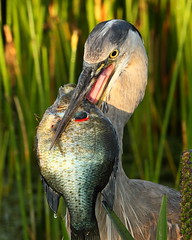
Great Blue Heron
Hungry?

This is perfect for AREA, she is desperate for a pet. (portable fishbowl; Core77)

A stranded fish that ate a fish that ate a fish.... (scroll down a bit on the page and you'll find it, but I bet you will get stuck on the pictures above it too; part of the Accidental Mystery series on Design Observer)

The first photo of the LIFE magazine series Into the Deep: Odd, Scary Sealife is of tiny cute pygmy seahorses. Scary?  Really? OK, there are sharks later in the photostream. Check out number 11, the eye of the blue-spotted stingray.  (LIFE Magazine archives - I love them!)

Next time you go to the bathroom, be careful when you flush. (Geekologie)

Oy, koi!  And truly neon. And, in case you are unsure what this is, you can just read the letters on the animal.

Wednesday, December 15, 2010

Wednesday, April 7, 2010

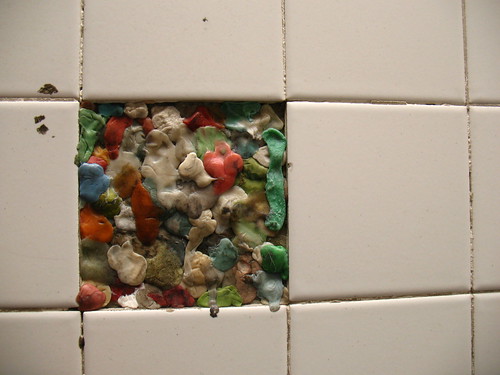
I would not like to be asked to do a DNA test of this...

art in New York city

(Oh, you want to know what it is? I went to New York and had to go to the bathroom at Penn Station, and in the booth one tile was removed at eye height, and instead was this... about 150 chewing gums I think, all pressed in. You could get some good fingerprints here I think!)

Monday, April 5, 2010

Food fit for eating?

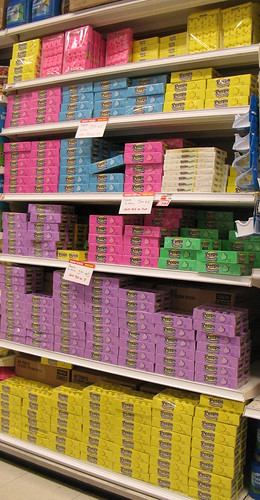
peeping Peeps are here again  At Easter time, many shelves in many grocery stores get filled with Peeps, a strange marshmallow concoction shaped like little birds, ghosts (for Halloween), and rabbits, etc.  Their shelf life is probably forever since they seem to be made mainly of sugar and preservatives, with color added. I don't like them much to eat, but for some, this is heaven...  This is our local food store last week when the Peeps had arrived.

A friend of mine says that the Peeps are best when you let them sit out of the box overnight so they develop a nice dry crust - then you bit into the hard shell and a soft, chewy middle. 

The first Peeps where made in the 1940s. I bet you can grill them and make s'mores, but I have never tried.

Peeps have been used as theatrical props for a while,and there are contests of using Peeps in dioramas featuring famous movie scenes and historical events. How about a Marilyn Monroe, made out of Peeps? Photo by M.V. Jantzen on Flickr, of the winner in the recent competition run by Washington Post, a large newspaper.


Then came the competitions and challenges of the Peepshi. How to make a nicelooking sushi out of all junk food: Peeps, fruit by the foot (long bands of colored tough fruity things), and Rice Krispies treats, all things that my kids are familiar with.  The competition spread to Flickr, where people started to add their home-designed junky sushi :)  Enjoy! more photos here!
Photo by Nate Marsh on Flickr (CC license). 

Friday, March 19, 2010

OK snapshot: Nåt att bita i? (Something to chew on?)

Rock art shaped like Swedish raspberry and licorice candy ('hallonbåtar och
lakritsbåtar'). Seen in Stockholm of course.

Wednesday, April 15, 2009

Review of latest delivery from Sweden

OK, I have to admit. Licorice candy is food. Seriously. And my wonderful brother O.K. sent me some incredibly interesting and innovative licorice candy from the store Lakritsroten (the Licorice root) in Stockholm, Sweden (thanks!!!!!!!!!). But someone needs to tell the people at Lakritsroten that the flower they have as their logo IS NOT from a licorice plant. Licorice roots are not that exciting so I understand their desire to have something nicer, but the flower isn't even from a bean plant in the same family, Fabaceae. Come on, Sweden is the home of Linnaeus and botanical classification, you can do better!

If you want to visit, they are open 11.30 Am to 6 PM on weekdays, and sometimes on Saturdays, and they are located in the old beautiful neighborhood of Odenplan (Odengatan 15). O.K. sent me a wonderful assortment and here is my review.

Djupur. Icelandic licorice. Yes it exist! This candy was covered in crispy white surface, with chewy licorice under, quite wonderful. Highly recommended. I think the name means Deep or something like that, and it is quite appropriate.


Yummy! Lakritstryfflar - licorice truffles. Larger-sized softish salmiak-crusted licorice balls with an even more softish inner center. A great thing and something I had never had before. Definitely worth trying. PP thinks salmiak (ammonium chloride is the equivalent of diaper smell, so some people must lack the gene for this great candy... :)


Now this was the best. "Lucifer - med chiliextrakt" - Lucifer with chili pepper extract. This was great except for that the soft pieces melted together into a giant soft ball during the trip across the Atlantic. You had to pull them apart as far as it goes, and consider the rest a giant piece of chewable licorice. Wonderful taste of the chili pepper - I loved it.


Snusmojänger - Snuff thingies. I don't think I need to elaborate a lot on something with that name, right? :) Hard, sweet, licorice, and brown. Wonderful....


Salmiaklinser (salmiak discs) from Holland. Maybe that is why they were small, dry, and not so exciting. Ha, sorry all Dutchmen. You do make great licorice.

Saturday, July 26, 2008

Calculated joy

How many % cacao do you think? If you don't know, you can use the chocolator to figure it out. Here too.

Tuesday, February 19, 2008

Ecuador - Food in Otavalo

Candy apple, anyone? These looked poisonous.
Fried fish from the nearby lake was popular streetfood.
Dyes and spices (spies and dices). The red ones are annato seeds from the lipstick plant.
Little marinated snails served with limes. We saw little kids walking around eating this treat, one snail at the time. The snails are also from the Andean lake, not from the ocean.
Eating lunch at the food market.

Sunday, December 2, 2007

Twinkies - the good, the bad, and the ugly

Twinkies, a typical American snack food, that you can buy in any supermarket or gas station, has been deconstructed in a new book with the suitable title "Twinkies, deconstructed" by Steve Ettlinger.
"In this fascinating exploration into the curious world of packaged foods, Twinkie, Deconstructed takes us from phosphate mines in Idaho to corn fields in Iowa, from gypsum mines in Oklahoma to oil fields in China, to demystify some of America’s most common processed food ingredients—where they come from, how they are made, how they are used—and why. Beginning at the source (hint: they’re often more closely linked to rocks and petroleum than any of the four food groups), Ettlinger reveals how each Twinkie ingredient goes through the process of being crushed, baked, fermented, refined, and/or reacted into a totally unrecognizable goo or powder with a strange name—all for the sake of creating a simple snack cake." book website

The rumor is that Twinkies never go bad, they can be stored on a shelf for years and never mold or never taste bad. They are like little rolled up soft cakes with white filling. So what is really in them? And how do they really taste? I had never had one in my whole life, but after readiing part of this book, I got a package at the store to do a real scientific test in our family.
500 million Twinkies are made and sold each year, so this is an extremely popular store item.

The list of ingredients is incredibly long, and the complete list is available on Wikipedia. The main ingredient is flour, followed by sugar, corn syrup, water, and high fructose corn syrup. But it also has strange things like sodium stearol lactylate, polysorbate 60, yellow 5, and sorbic acid in it. This is not like homebaked 'bullar'.


We opened up the package. There they were! Little moist, spongy rolls inside see-through plastic packages. One for each of us and a few extra. Let's take a bite!

I wrote down all the comments of course, but can't find them now five months later, but the conclusion was very different for different family members.


Guess who this is? This person loved Twinkies!
Another person said they tasted weird, the first bite was OK and then it was all chemicals. Personally, I could not live on these, and I won't buy them again. I don't understand why people like them at all.


All that was left in the end was wrappers.

On the official Twinkie website, they have a recipe for Twinkie Sushi. Hmmm....check out the pictures. Our sushi master here at home (LA), thinks those sushi look gross. I agree 100%. More real and happy food for the people instead of this.

Sunday, October 14, 2007

Stamp of the day- Theobroma Cacao and some more about chocolate

Brand new stamps from Sweden, chocolate-theme.

On this site you can read about the story of the chocolate bean, http://www.bizzbook.com/choklad/choklad2.html
On the site I have learned the following:

In short there are 3 types of chocolate beans trees. Criollo, Forastero and Trinitaro. Criollo-native, Forastero-foreign and Tinitaro- from Trinidad. The final taste of the chocolate and caracteristics depends of the blend of different types of beans, just like coffee och vin och whisky. 42% Trinidad, 21% Accra (both strong) och 37% Caracas (mild). This mix is a superb chocolate. It´s not all about the percentage of cacao, it´s more about the bean and the origin.

Det finns 3 olika sorters kakaobönor, Criollo betyder inhemsk och Forastero betyder utländsk. Trinitaro är en hybrid av de två som dök upp då Criollon ersattes av Forastero på Trinidad efter att nästan alla Criollo- plantor förstörts i en orkan. Chokladens slutliga smak och karaktär beror till stor del på blandningen av olika sorters bönor, precis som whisky och vin kan vara beroende av att blandas från olika fat eller druvor för att hålla en jämn och hög kvalitet. Om en choklad till exempel enbart tillverkas av Accrabönor får den en väldigt stark och kärv smak, medan Caracasbönan ger en mild, men utmärkt smaksatt choklad.

Kakaobönan kan delas in i starka och milda varianter; superb choklad kan göras av en blandning av 42% Trinidadbönor, 21% Accrabönor (båda starka) och 37% Caracas (mild). Allt handlar inte om procenthalt kakao, det handlar mer om bönan och ursprungslandet.

Starka varianter Strong taste

Milda varianter Mild taste

Accra

Caracas

St Lucia

Mauritius

Para

Sri Lanka

Trinidad

Arriba

Grenada

Java

Surinam

Madras

Cuba

Jamaica

Dominica

Seychelles

Lite tips på Chokladprovning. Nedan följer några citat från deras sida.

"· Choklad från Equador i Sydamerika: En choklad med en balanserad smak som inte varierar speciellt mycket med tiden. Sötma, sälta, bitterhet och syrlighet (som hos hallon) Som all Latinamerikansk choklad är detta en mild choklad. Smaken påminner lite om mint och tobak.

· Choklad från Venezuela i Sydamerika: Ska du njuta av fin choklad så ska du låta den smälta sakta i munnen. Gör du detta så märker du den stora skillnaden i jämförelse med choklad från Equador: Choklad från Venezuela varierar mycket mer i smak med tiden: Först kommer sötman, som sedan följs av syrligheten, för att avslutas med bitterheten. Man känner också hur torrheten växer med tiden.

· Choklad från Madagaskar utanför Afrika. Choklad från Afrika är lite kraftigare än choklad från Sydamerika. Choklad från Madagaskar påminner om choklad från Equador. Choklad från Madagaskar är välbalanserad, men den smakar mer än choklad från Equador, och den har en torrhet som kommer fram på slutet.

· Choklad från Ghana i Afrika. Denna choklad doftar mindre än Madagaskar. Choklad från Ghana är söt men inte mild. Detta är den kraftigaste chokladen av de som nämns här. På slutet kommer torrheten och den bittra smaken fram. Om man gillar Whiskey, så prova gärna en inte för snäll Whiskey tillsammans med choklad från Ghana.

· Choklad från Trinidad (Trinité). Doften från denna choklad påminner om mild tobak. Smaken är syrlig, söt, och vi hittar också bitterheten där. Vissa associerar choklad från Trinidad med kardemumma.

· Choklad från Java är söt och passar utmärkt med vanligt kaffe. (All choklad passar bra till kaffe.) Använd chokladen i stället för socker och mjölk till kaffet. En ännu godare kombination är choklad från Java och en Espresso.

· Choklad från Chuao (en dal i Venezuela) passar till te eller kaffe. Denna choklad är lite syrligare än choklad från Java. Choklad från Chuao smakar citron och lime. Om man jämför med övrig choklad från Venezuela (som är torr), så finner man att choklad från Chuao har mer fruktighet i form av en limesmak."

Vem kunde tro att choklad var så variationsrik? Who thought chocolate was so rich of variation?

by EH

Friday, October 12, 2007

Snapshot: Random order


In response to PP:s post. What makes a pattern, and when is it not a pattern any more?

/O.K.

Wednesday, August 22, 2007

Buh!

I went shopping as usual a few days ago at the local Super Stop & Shop, and went into the 'seasonal' aisle. There, over two months before it is actually happening on Oct 31, were two giantly long shelves filled with Halloween candy and decorations. First, who needs all this candy? Second, who buys it over 2 months before the only day it will be handed out on? It kind of sickens me, both the useless waste of resources on marketing and how people are fooled into buying too much of what they really don't need (like wooden or plastic monster decorations made in China that will fall apart after one week outside). I think this symbolizes so much what is wrong with modern holidays and their marketing in USA. I don't mind Halloween at all, what I do mind is the mass-produced fake excitement about them. Bring me locally made pumpkin pie, some candy corns, and a witch hat and that is all I need. And a dark night of course and two kids in tow. Trick or treat!

Harry Potter-themes are used a lot in Halloween candy today, like these Blood Pop
(strawberry-flavored lollipops). I just finished volume 6 of Harry Potter last night. Dumbledore is dead, Snape is in hiding, Harry broke up with Ginny... what is going to happen!? Don't tell me!


This is just a small part of one of the aisles - multiply this with about 6 and you get the total Halloween shopping area in this supermarket. That is more than the total shelf area in a Swedish country store. And what do they do with the stuff that doesn't sell? Save it for next year? Give it to pigs? Send it to the poor in Africa? Burn it up?

Wednesday, June 6, 2007

New Sweden is old!

Once upon a time, about 400 years ago, the megalomaniac Swedes (ie., their king or queen at the time), decided to become a colonial power. So they sent off a ship (Kalmar Nyckel) with some (un?)lucky farmers and a Lutheran minister, and sent them off to the United States where they founded New Sweden along the Delaware River. This was in the early 1600s. They didn't last long, well, the people did, friendly as they were with the Lenape Indians, but when the Dutch showed up with many more soldiers and sieged the Swede's little fort made out of mud, the Swedes gave up their colony. So, the Swedes gave up, and the Dutch took over. I read somewhere that there are a million descendants from those 400 Swedes, but I don't remember the exact number.

But, what is left of the Swedish heritage in New Jersey? EH and I decided to find out. We went on our 2-day road trip and here is what we found, most of it accidentally, in fact.


We are getting nearer to the Old Swede's hunting grounds - see! Kurt's Liquor Store, obviously an old Swedish name.


Even the township is Swedish - Elsinboro Township (Nya Helsingborg?). Not far from here was Fort Elfsborg.

Fort Elfsborg (Nya Alvsborgsfastningen?) is no more, except for a sign. Sven Skute abandoned it in 1651 (maybe he 'skuttade' away from it). It seems like nobody really knew where it was, but the name is written on the road map of New Jersey.


Here is the shore, close to the old fort (not 'old fart'!). We reclaimed the land, can you see it in the sand? The waves reclaimed it again, really quickly! Too bad it was an American flag, not Swedish... At this point in New Jersey, the horizon is not flat, a very strange phenomenon that scientists have wondered over since 1651, when the Dutch took over. Maybe there is a lot of right-leaning people in this part of the state.


We were happily driving along, passing Hancock Historic house at Hancock Landing where some people were massacred during the revolutionary war (the American landscape is full of massacres and battlefields in this part of the country, really depressing). We saw this little house, and when we got closer the sign said "Swedish stuga", for real. It is a copy, but the logs are 400 years old. What do you think, does it look like a Smalandsstuga?


Mmmm, Swedish fish, the most famous "Swedish" candy. The fishes are always red here, but in Sweden they come in all kinds of colors, and my favorite is the Salta Sillar (EH says they are rare these days, maybe because they are disappearing like the cod?). No more cod pieces for the Swedes! Especially not after the Dutch took over, then it was just still life for all.

We also found other Swedish things, but that is saved for another post.

Photos by EH, text by LS