Showing posts with label spice. Show all posts

Monday, September 16, 2013

Green, brown, yellow and purple...

For the first time in my adult life I have tried to dye something, and it came out great!

 I have memories of dyeing a cotton scarf at a camp when I was maybe 12. The plant we used as dye was birch branches and aspen leaves. The people that used aspen got these really nice yellow scarves. We that were stuck with the birch got dirty light-green to beige scarves that looked old and worn... It was a major disappointment, especially since I had asked for permission to use the aspen, and the camp leaders said - no, we will split all groups in two parts, and you can't be in the other group. Why not? No idea. Probably some kind of semi-I-will-show-the-kids-I-have-the-power scheme.

Anyway, since then I have not dyed anything with natural colors that I can remember, and I am not counting stains from tomato sauce, blueberry jam, wine, or coffee on my shirts. In early summer I bought some undyed white silk scarves, white cotton yarn, and cleaned wool rowing (basically unspun naturally white wool). We got some books, and read and learned. The materials have to be pretreated with alum, a chemical, so the dye takes better, so I did that.

 Now, what to use as dye? I knew I wanted to make different colors, and base it on all natural, things I had at home.
RED ONION: Natural dyes on silk, cotton and wool
The first batch was red onion skins. Who knew that red onion can give green colors!? Surprise! The colors showed in the book didn't really match what I got, and that is probably due to the chemistry of our well water. I also dyed some filter paper in this batch.
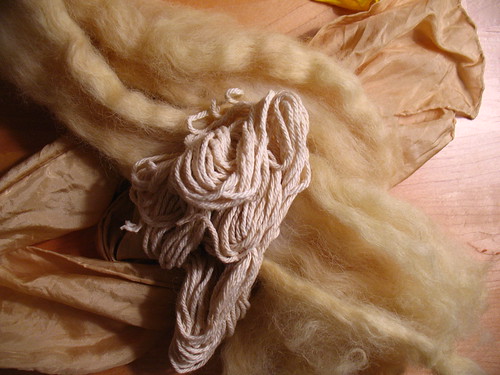
 COFFEE - Natural dyes on silk, cotton and wool
Second batch, coffee... Old coffee grains, cooked up again, filtered off, and then used as a dye bath. I think my coffee was pretty weak, so it became a light brown. TURMERIC: Natural dyes on silk, cotton and wool
Third batch, yipeee, Turmeric! From the spice cabinet. What a color! Bright orange!!! Like, like, I don't know what. A living, deep orange. BLUEBERRY - Natural dyes on silk, cotton and wool
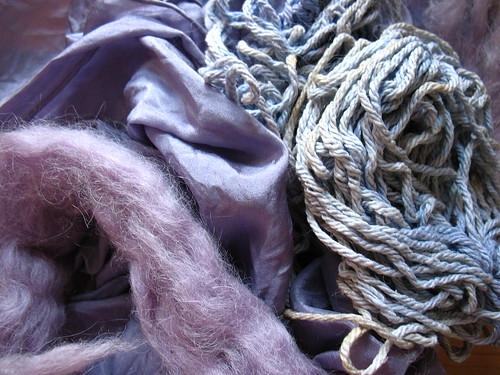
Final fourth batch was a little test. Sometimes we have fresh blueberries from the store that go bad (=mold) in the fridge, so I had saved up a bag of them in our freezer. I cooked the berries down, filtered them, and then used the blueberry juice as a dye bath for 4 days. I had put the textiles and the dye liquid into an old orange juice bottle. Unfortunately I screwed on the top tight and left it out in the sun - after 4 days the bottle was ready to explode. Fermentation! :) Nothing got destroyed, and the colors of light purples are gorgeous.

The dyed wool and cotton yarn is now in Baltimore in AREA's artsy hands, to be used in some creative work. I can't wait to see what she will do with it.

What I learned?

  • Always treat your fibers with mordant, then the colors will be better. 
  • Don't hang the finished textiles for too long in the sun or they will become sunbleached. 
  • Do not make fermented blueberry juice. 
  • Big-mouthed orange juice plastic bottles are great for long-term dyeing.  No risk that an animal will drink it and you can shake it a lot to distribute the liquid well. 

Sunday, August 4, 2013

There is also food in New Orleans...

...it is not only alligators, swamps, giant enormous black grasshoppers, and tangly Spanish moss... Louisiana is also the home to absolutely fantastic food from the Cajun and Creole traditions.  Seafood abounds, of course, with New Orleans being situated near the mouth of the Mississippi River.  Eating in New Orleans is kind of like bird-watching at Cape May - you just can't miss good food (or the migrating birds).  It is just everywhere as long as you stay away from the very few chain restaurants and hotels downtown.  We were mostly in the French Quarter and the Arts and Warehouse district and ate really well.  What we ate?  This!

seafood platter at Mulata's

Mmm, this was fantastic.  Here you have all the goodness of New Orleans food nearly on one plate from Mulate's, a Cajun restaurant.  (= Go there! Eat!) Crawfish tails, stuffed crab, blackened fish, shrimp on a skewer, potato salad, deep-fried octopus, deep-fried oysters, baked potato with cheese, oh and some vegetables in a corner as an afterthought.  This is not veggie heaven, this is seafood heaven, as you can see.  In New Orleans, even the botanists don't care about food plants. I probably ate more oysters in 4 days than I have eaten in the last 4 years during this trip...

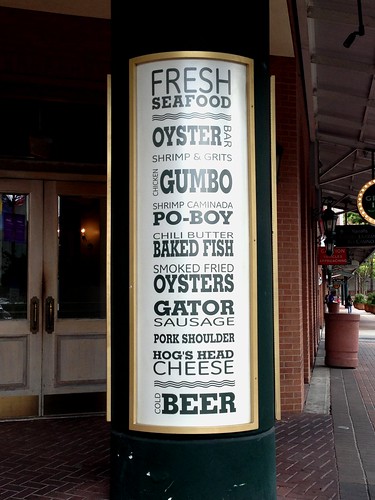
sign outside Grand Isle restaurant and oyster bar in New Orleans

This is the sign outside Grand Isle Restaurant and oyster bar.  What is Hog's Head Cheese?  Wikipedia will tell you, and I think I will pass on it after reading about it.  But the oysters were fresh like cauhgt an hour ago at this place! :
"Head cheese is not a cheese but a terrine or meat jelly made with flesh from the head of a calf or pig (sometimes a sheep or cow), and often set in aspic. The parts of the head used varies, but the brain, eyes, and ears are usually removed." (link)
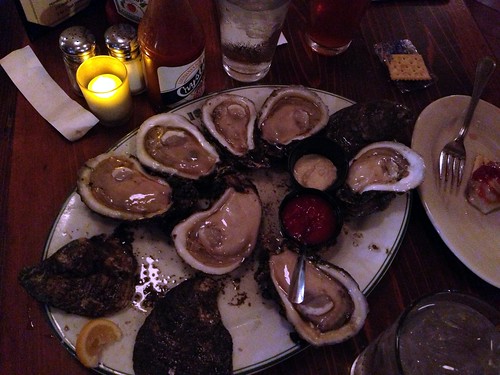
oysters at Grand Isle oyster bar

 The late snack oysters we had at Grand Isle. Moist and fresh! So raw that you nearly could feel them wiggle in your mouth. People that don't eat oysters are wimps (I think) and don't realize what amazing thing they are missing. 

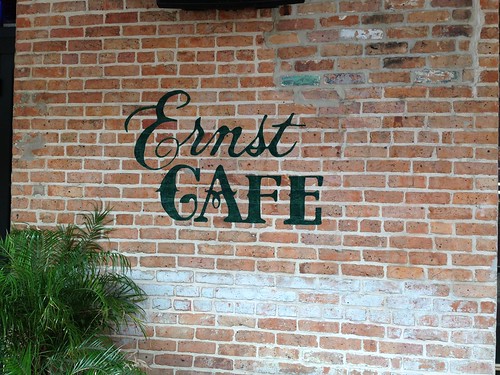
Ernst Cafe in New Orleans

At Ernst Cafe we sat outside in 30-degree (Celsius) / 90-degree humid heat and drank cold beer until after midnight.  The whole place was just run by one bartender...


Louisiana has a million hot sauces.  Well, maybe not, but at least a million bottles.  Tabasco is made here. As is Dave's Insanity Hot Sauce, Hog's Breath Hot Sauce, and many other hot sauces with names that can't be written on a family blog. If you ever wondered about the original Tabasco hot sauce - yes, it is kosher and an unopened bottle lasts at least 5 years. More hot sauce information here.

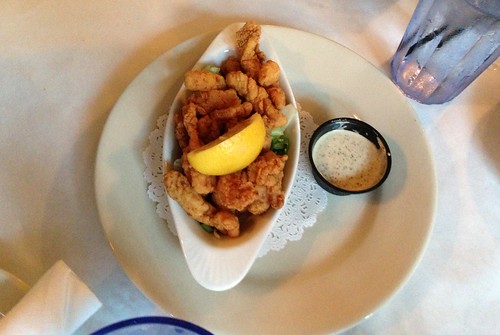
fried alligator

Fried alligator - we just had to order this.  It was good, very moist and tender, white like chicken, doesn't taste like fish, and less stringy than chicken.  But I don't think I would like to live on it for years. On the other hand, I rather eat than be eaten. Each year over 75 000 alligators are captured in Louisiana (90% of them being male) from a population of over 2 million alligator.  Some alligators are called 'Elvis' when they are small, at least if they are kept on boats as pets for tourists. So, we had an Elvis sighting in the form of an alligator - maybe a reincarnation of the real Elvis?

Garden & Gun magazine

You realize you are in the South (of USA) when you see this magazine at the airport, Garden & Guns.  I have never seen it in the northern parts of the US, but sure, gardening is truly a kind of micro-warfare against deer (8 feet of plastic deerfence and no deer in the garden), Japanese beetles (feromone traps), diseases (water and nutrients, and then whatever dies off is just life), blister beetles (handpick and drown), hawkmoth caterpillars (which I let live, so they can get parasitized and release more larvae-killers), slugs (sigh - get to handpick and drown them), rabbits and groundhogs (keep them out with fencing)... ok, turns out I don't need a gun for my gardening.  The magazine has a strange (for me) mix of shotgun reviews, pie recipes, and anecdotal stories from southern gardens. I understand hunting magazines, but not gardening with guns.

Sunday, May 19, 2013

The amazing world of candy cultures: Sweden

I believe that candy and desserts are one of the few areas were strong cultural differences still live on. Thai, Chinese, Italian, Japanese, and American food have conquered the world and anybody knows what sushi, burgers, and ketchup is now.  But I think candy has a long way to go to become more global, at least candy outside of the chocolate main stream.

So, for your food education, here is some typical Swedish candy that you can't really buy in the US or other countries of the world (the northern parts of EU excepted).

First, Swedes love licorice, and they love salty, sour or very fruity candy.  Generally speaking, American candy of today is either supersweet (sickly sweet), or chocolatey, and that is different from the Swedish candy.  Swedes also like mixes of flavors (salt & sour, etc.).


Turkisk peppar ('Turkish peppar').  Horribly hot-spicy hard licorice candy with a dry powdery inside with ammonium chloride (salmiak) powder.  Great!
Classic Swedish candy called Gott & Blandat (= Good and Mixed).  It includes sweet and salty licorice and wine gum. This is the traditional classic kind and there are also newer kinds around (salty, sour, etc.). 
 Djungelvrål ('Jungle howl') are supersalty little licorice pieces that are very chewy and good.... also with ammonium chloride, which some people of this household call 'diaper candy' - I think ammonium chloride salt is a very acquired taste. You either hate it or love it, kind of like celery and cilantro.
 Salta katten ('The Salty Cat') comes in tiny old-fashioned small paperboxes and are small pieces of licorice, also with ammonium chloride.  Really good stuff!  I love the design - check out the tongue of the cat!
Dajm is a long, hard, flat crispy, hard caramel piece that is covered by milk chocolate. You can also buy it as small individual pieces in small wrappers.  No licorice here!

Then there is of course Swedish fish - WHICH DOES NOT EXIST IN SWEDEN.  This is the American version of Swedish fruity, chewy, sugary candy, which in Sweden comes in many shapes and forms, not just red fish.  The most common are 'sega råttor' (= chewy rats), which often are green, yellow, red or maybe even in black (licorice).  Oh, and this custom of calling non-black things licorice as you do in the US, that doesn't exist in Sweden.  Licorice is always black and always has true licorice plant extract in it.

Wednesday, December 19, 2012

Stamp of the Day: Julbak


Swedish Christmas traditions includes a big baking day - the 'Julbak', where the most common thing to make is 'pepparkakor' (gingerbread cookies).  Here on this Swedish stamp Pippi Longstocking ('Långstrump') is baking on her kitchen floor with the help of her monkey Herr Nilsson. Pippi is my favorite character in Astrid Lindgren's children's books.  We haven't made any cookies at all this year, but plan to make hazelnut bread, a family tradition from my grandmother, and maybe the kids will make some cookies too.  In Sweden ginger bread cookies are called "Pepper cookies", but they have no pepper in them at all.  I wonder how that name came about. 

Thursday, October 20, 2011

Stamp of the Day: Cinnamon

Cinnamon is a wonderful spice, and what you eat when you taste that brown powder is ground up bark from cinnamon trees.  The story is that the best cinnamon has to be cut with silver knifes (I bet that is not true!). There are at least 4 species that have been used as cinnamon, and they taste slightly different.  This Indian stamp depicts the most valuable one, which has bark that rolls up on both ends of the edges, into a tight cigar-like roll.  Cinnamon is in the Lauraceae, the laurel family, same as bay leaves, sassafras, and laurel. I love cinnamon, in small doses, on cinnamon rolls, rice porridge, and in Swedish Christmas glögg. In Swedish, the word for cinnamon is 'kanel'.  I know, that makes no sense whatsoever.

Wednesday, April 6, 2011

Stamp of the Day: Gräslök (chives)

The Swedish name for chives if you translate it literally means 'grass onion' and that is what the leaves look like.  Bunches of tiny linear leaves from tufted plants. Of course the plants have no nodes, a tell-tale oniony smell, and very ungrasslike purple flower heads, but otherwise, just an onion grass.  Chives grow wild in Sweden, and here in New Jersey you can grow them as a deer-proof garden plant.  Well, I do, but nobody else has figured this out yet.  Chives really should be more popular here, it is a great plant both for its taste and looks. (Latin name - Allium schoenoprasum)

Wednesday, April 14, 2010

Stamp of the Day: The love and hate of cilantro

Some people hate cilantro ('koriander"), and think it tastes like soap.  I used to be one of them, but changed after I had some really good Asian and Mexican dishes with it.  Now I only really don't like celery, especially root celery (celeriac).  A little of it cooked in soups is OK, but raw celery is not my thing. I am not sure it is genetic since my family all loves celery and cilantro, but it certainly is something biological about it.  AREA loves to eat whole celery sticks dipped in peanut butter.

The NY Times article I linked to above is currently the most e-mailed article on the NY Times website - it must really have struck a cord with the readers.  Who knew we cared so much about cilantro, a tiny little herb?

The stamp is from Israel and shows cilantro (Coriandrium sativum) in its full glory. 

Sunday, September 27, 2009

When life gives you habanero chilies...

... and your habanero-nibbling brother (OK) is not around, and you need to dispose of 30 hot-as-hell chilies in some fasion, you make JERK. Jerk is not some kind of misbehaved right-winger in this case, but a Jamaican seasoning that is fantastic on shrimp or chicken. And it freezes well, so you can make a lot and it will last forever. Habaneros are among the hottest of all chilies, so this is not the kind you can put in your salad or quesadilles. Or rather, 'you COULD do that', but it would not be good except the first microseconds.


You take the fiery hot chilies and remove the seeds while wearing latex gloves, nostril pluggers, and safety goggles, plus plastic bag and waxpaper on the cutting board - all to avoid unpleasant surprises later when you touch your eye or cut a good cheese on the same cutting board. (The recipe here is not exact - if you want the exact recipe a la our friend Dana, let me know in the comments. )


In a blender, a most magnificent innovation, you then dump the chilies (no seeds!), lots of scallion, lots of cheap yellow mustard (think hot dog kind), fresh ginger and garlic, and spices (coriander, cumin, allspice and LOTS of black pepper), and salt. Thanks LA for grinding 9 tablespoons of black pepper! Sorry about your bleeding thumb. You run the blender fast so it all gets mixed into a thick gue.

OK, it doesn't look tasty, but it is. Depending on how many peppers you put in, you might or might not be able to taste it without burning yourself. You freeze the jerk paste in little plastic bags, about 3 tablespoons in each, which is enough for a pound of shrimp or chicken. When you want to use it, take a bag out, dump the seasoning onto the meat, let sit for a few hours, and then grill. So incredibly good, and HOT.

OK, maybe we can find a way we can send this over to you in Sweden, for your yearly habanero dosage...

Thursday, September 24, 2009

Stamp of the day: Herbs from Sweden

Today it´s "Frimärkets dag" or " Day of the stamp" in Sweden. Our Post company celebrates this by issuing a new set of stamps. They go well together with LS blogpost below about her kitchen efforts I think. They are very typical swedish stamps in my opinion, clean design, bright colours, and very informative with name in latin for the plants. So this post is especially for the BOTANIST...

Monday, September 21, 2009

Homemade hot and sour feasts

Ready to taste my newly made Southwestern Hot Sauce bottled in recycled akvavit mini bottles? Me too, in about a week or two when the sauce has matured a bit. It is made from organic jalapenos and bell peppers, plus a lot of spices. I hope it is hot but not too hot. It was made from jalapenos and dried ancho pepper powder, plus other spices. This weekend I also made sambal oelek (a spicy Southwest Asian condiment, packed in an old baby food jar (I knew they could be used for something good). Sambal is just chilies, a tiny bit of salt and sugar, and a little distilled vinegar. I used the Sapporo variety of chilies for this, mainly because that is what I had just harvested from the garden.

And then I packed lots of herbs into vinegars that are now maturing. You take herbs (clean, but no need to wash them), stuff them in the bottom of a jar, heat up white wine or apple cider vinegar, pour it over the herbs boiling hot, close tight and swirl around niside to sterilize all the surfaces inside, let sit for 2-3 weeks, then remove herbs and put ready vinegar in bottles.

I made lemon+mint, tarragon+garlic, chilipepper+oregano+thyme, basil+chilipepper+chinese chives, plain basil, sage vinegar (that is the photo of the rounded leaves with little hairs on them) and some more. I filled a whole big jar with fresh hot serrano chilies and poured hot vinegar over them too, in a month or two they are ready to be eaten by PP. The rest of us think they are a bit (rather a lot) too hot for human consumption directly out of the jar.

I also made basil-infused olive oil which smells fantastic! You take lots of basil leaves, put them in a pot with a cup of olive oil, let is boil slowly for 5 min (not get too hot!), then let it cool, strain away the leaves and bottle it up. Store in fridge. The vinegars you don't need to store in the fridge. (This last photo is from left to right: basil oil, pickled serrano chili peppers, and mint+lemon vinegar.)

Friday, August 8, 2008

pepper and...

The best looking graffiti I have ever seen. In Vancouver's Gastown, of course. It did point towards the ocean so it was accurate too.

Thursday, June 12, 2008

Food quote of the day

Chili is a lot like sex: when it is good it is great, and even when it is bad, it's not that bad. - Bill Boldenweck