Showing posts with label insects. Show all posts

Wednesday, December 31, 2014

The end of one year, the start of another

2014 went by fast when you look at it in hindsight... swoosh! But a lot of interesting and good things happened, and some that we could have been without, as always.  My blogging was reduced due to other things, but here is a little summary of the things I never got time to show you earlier from the year that is about to pass on to history (2014).

WEATHER: There was a very cold and wintry beginning. Everybody learned the word 'polar vortex' with caused low temperatures and snow and ice.


FOOD: Many good Swedish-style breakfasts, which are like true mini-smorgasbords. Kalles Kaviar we have to get at IKEA here in the US. 

CRAFT and ART: Philadelphia and Baltimore Craft Shows, as well as Morristown and Peter Valley. Weavings by AA, trips to Grounds for Sculpture, and much more enlightened and enlivened 2014. This sculpture below by Brower Hatcher is one of my favorites at Grounds of Sculpture... it is really a place worth many visits.  Below that is a piece of one of Erin Wilson's many handmade, innovative artwork quilts, which we love. (The photo doesn't really do it justice, since it was taken with a smartphone.)

SWEDEN: a trip in March to the homeland, led me back to some places I hadn't seen for over 35 years, and Fiby Forest was a wonderful place to revisit. March is usually a cold and dreary month in Sweden, but there are wondrous things if you look closer, red beetles, green mosses, and colorful food (indeed, these days Swedish food is not just boiled potatoes, brown meat and sauce).


IDAHO: Summertime was conference travel time as usual, this time in Idaho, a new state. Up into the dry areas of the Bitterroot mountain range was an experience - hiking around Blue Lake, and being in all the alpine meadows with new kinds of birds and flowers, and views and vistas. I am going back!

PLANTS: Lots of work work focused on plants as usual, especially neglected weeds, lichens, and edible and urban plants. Beauty and wonder is everywhere...

BUGS: But there was also a lot of insects showing up wherever I was, and they too can be gorgeous. Looking at them this year and finding help online to identify and learn about them lead to a whole new world opening up.  I guess I have to learn more about fungi next year...

OPTIMISM: And now, it is the last day of 2014. And, I end with a quote by Cheryl Strayed from her book Wild, on what nature (and life) really is about:
“It had nothing to do with gear or footwear or the backpacking fads or philosophies of any particular era or even with getting from point A to point B. It had to do with how it felt to be in the wild. With what it was like to walk for miles with no reason other than to witness the accumulation of trees and meadows, mountains and deserts, streams and rocks, rivers and grasses, sunrises and sunsets. The experience was powerful and fundamental.”

Wednesday, November 12, 2014

Recycle, reuse, refine

I have surfed the net and stumbled upon some fantastic art made of waste.

Like these sculptures made of broken CD's made by the Australian artist Sean Avery, found on the website Demilked.com.


And lots of amazing insects made from old electronic components, by Julie Alice Chapell, presented on her Facebook-page and on Etsy.


Electric wire is also recycled into art, like these little trees by BarbaraCCreations on Etsy


More pictures here. 

Be well, everybody!

Monday, September 1, 2014

Happy birthday, EH!

I hope you have a gorgeous happy birthday!  I am also sure all the moths and butterflies, mushrooms, birds, and flowers wish you a great day!


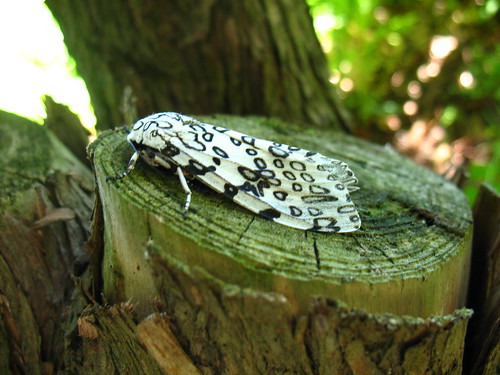
Giant Leopard Moth, Ecpantheria scribonia Giant Leopard Moth, seen in New Jersey

Thursday, July 24, 2014

Insect Biodiversity - small and big, in and out, up and down...

Since March I have focused a lot of attention on local biodiversity, both dead and alive, and both inedible and edible.  When you least expect it, you can see something intricate, interesting or gorgeous.  Here are some of the things I have seen in the last 6 months, as a small sample...

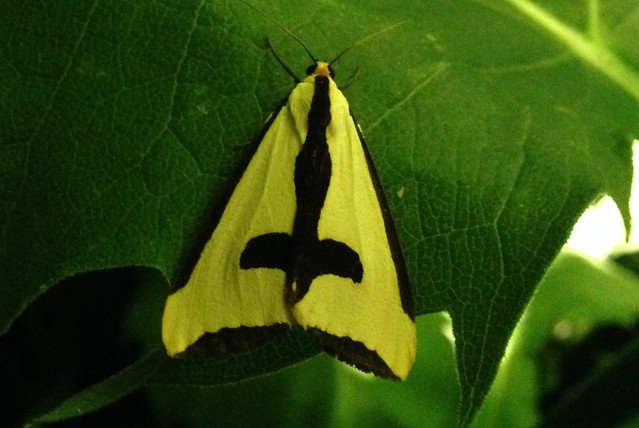
Clymene moth Haploa clymene IMG_2798
Clymene moth, seen one evening in July from our porch
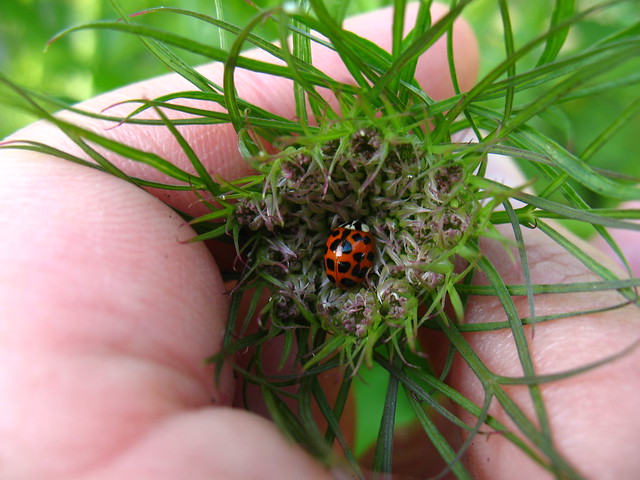
Harmonia axyridis (Multicolored Asian Lady Beetle) IMG_6593
An Asian lady beetle (not a nice ladybug) is hiding inside a flower umbel of Queen Anne's lace.


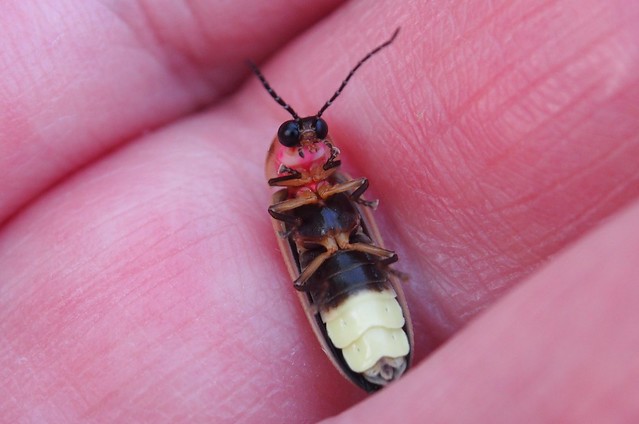
Photinus _firefly P6220560
Firefly showing off its bottom end, the one that blinks at night. Fireflies are beetles, not flies. 
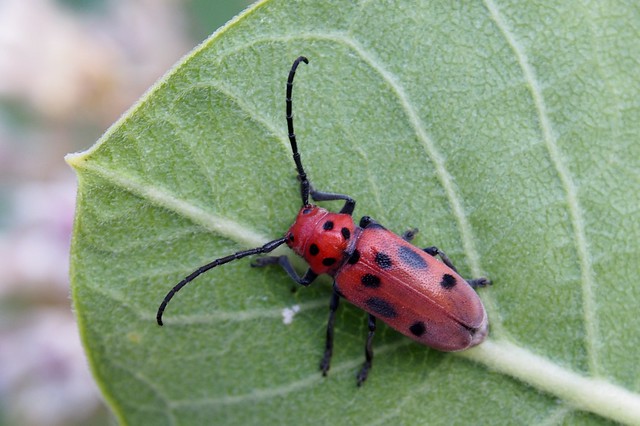
Tetraopes tetrophthalmus (Red Milkweed Beetle)red beetleP6220536
This unreal-looking long-horned beetle is called red mikweed beetle - I love the dots and the bent antennas.

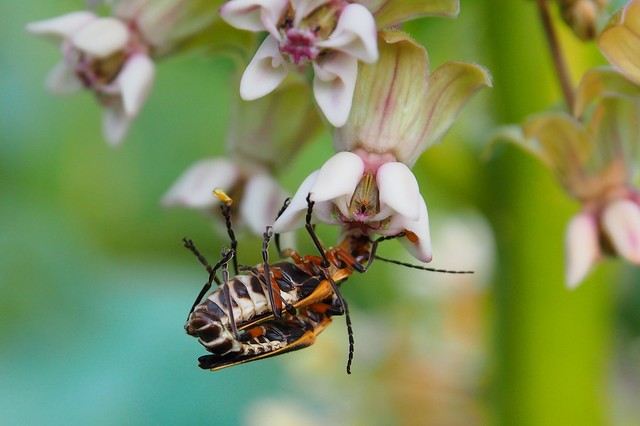
margined leatherwings (Chauliognathus marginatus_beetle_P6220529_cropped
These mating beetles have to be careful so they don't get stuck with their snouts in the milkweeds' intricate pollination systems.


All of these are from my backyard and I didn't have to look very hard to find them.  Living things are amazing, indeed.

Saturday, July 5, 2014

What is out there? Bioblitzing's amazingness...

A week ago I participated in a Bioblitz, a biodiversity inventory, at the old Doris Duke estate Duke Farms in Hillsborough, New Jersey (USA).  Her large working farm, park, and mansion has now been transformed into a sustainable natural area with large untouched forests, giant wildflower meadows, and bike trails and a science activity center.  It is a great place to visit.

A bioblitz is a concentrated biodiversity inventory by a group of people, experts and the public usually together, that takes place usually during one day or 24 hours. We were out for 6-7 hours during a hot and sunny June day, but spent the most time in the shady forest.

My group was going to look for plants that not yet had been found.  That might sound strange, but since there already was a long list of plants, we were going to look for the missing things, the gaps, and also go to some of the special areas that are inaccessible to the public to look for new species.  Of course, if we saw other cool non-plant things, then we should take note of those too.  So, what did we find?  Lets look!

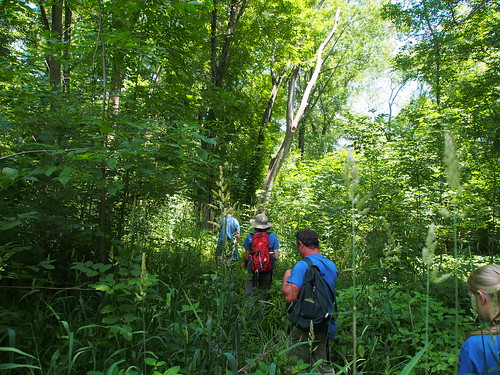
Bioblitzing in wetlands P6280555

We walked into a floodplain forest that often gets flooded during heavy rains.  The grasses and other plants reached our shoulders, and it was moist like the tropics.  Not many new plants, but a lot of animal life.

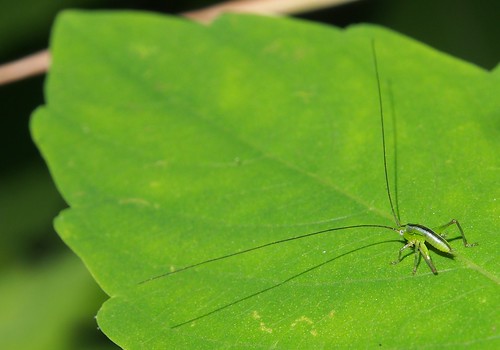
katydid nymphP6280571

A katydid nymph, very colorful and tiny.  I saw it first because its long antennae sparkled like thin metal wires in the sun. It is some kind of meadow katydid, but too early to tell what species it will become when it grows up.

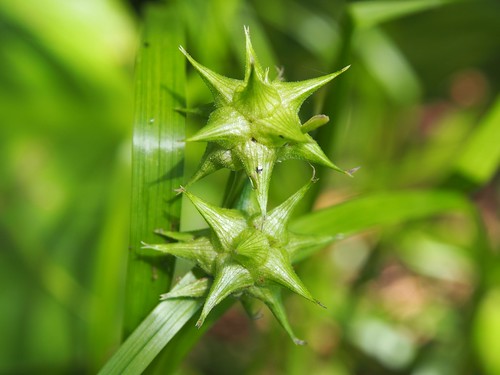
Carex cf grayi P6280545

This is a sedge, probably Carex grayi or a closely related species.  The inflated 'bottles' contain the fruit inside.  They look like green stars in the vegetation, and each sedge head is about 2 cm in diameter.

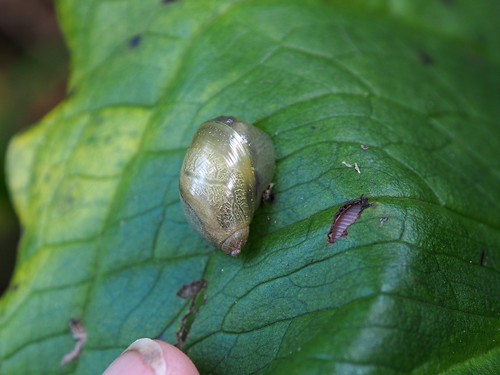
Amber snail maybe, P6280551

Lots and lots of snails were eating the skunk cabbage, and this one had a translucent shell.  I think it might be an amber snail, but I can't find any good book on land snails for northeastern USA.  Too bad, because that would be fun to learn more about.

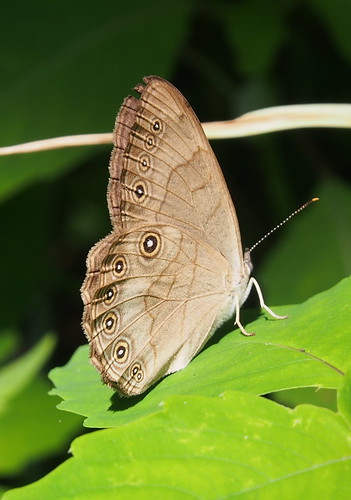
Appalachian Brown Satyrodes appalachia

This butterfly has an appropriate name - Appalachian brown (Satyrodes appalachia).  It was sitting on the same plant as the katydid nymph.  I have just started to look at butterflies and they are so different from the Swedish ones.  The names are weird too - like 'brown', 'comma', and 'question mark'.  Very descriptive, but unexpected. Or maybe not :).

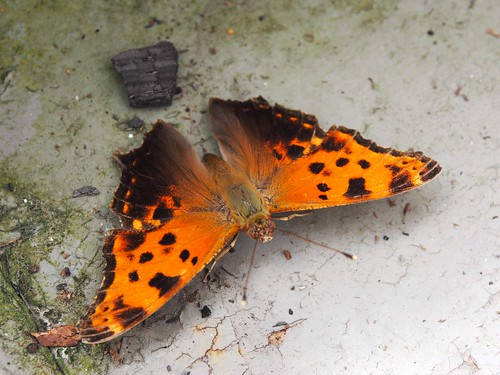
Eastern comma Polygonia comma P6280594

And here, this is an Eastern comma (Polygonia comma), a butterfly.  On its underside of its wings (which you can't see here) it has a white mark that looks like a comma, thereby its name.


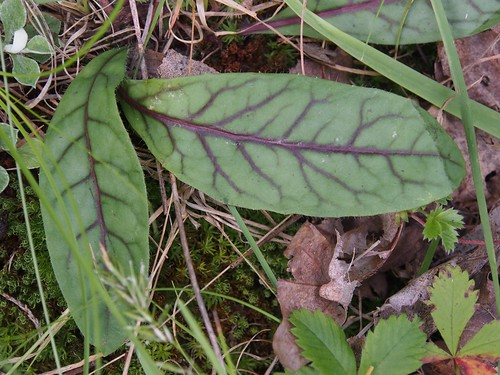
Rattlesnake weed, Hieracium venosum_P6280543

Didn't we see any plants?  Yes we did, but they were less fun to photograph!  Here is one that you can identify by its leaves only, which is always nice... no need to look for hairs on fruits or count petals!  This is rattlesnake weed (Hieracium venosum - those veins sure look like filled with blood!).  It is in the sunflower family and related to dandelions and such. And it is a wildflower, not a weed.

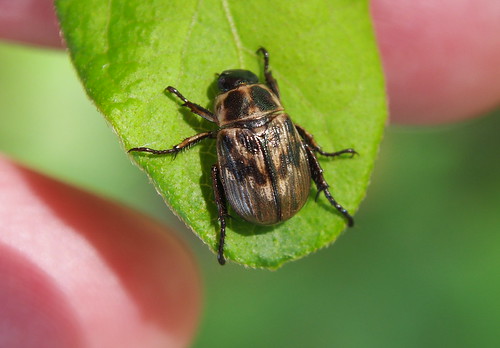
Exomala orientalis (Oriental Beetle) P6280540

Some species are not native to this area but are very common exotic newcomers.  This is oriental beetle (Anomala orientalis or Exomala orientalis) has its ancestor in Asia, but now is common in this area.  I have seen it on our porch several times, attracted to the porch light in the evenings.  It loves garden plants!

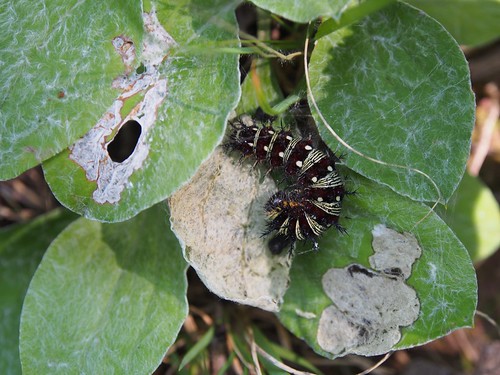
Vanessa virginiensis - American Lady P6280528

This ferocious-looking butterfly caterpillar will grow up and become an American painted lady (Vanessa virginiensis). It is eating a pussy toe plant (Antennaria) we found in a small area on sandy soil near huckleberry bushes.  I found one ripe huckleberry to taste, and they are very similar to American blueberries in looks and taste.


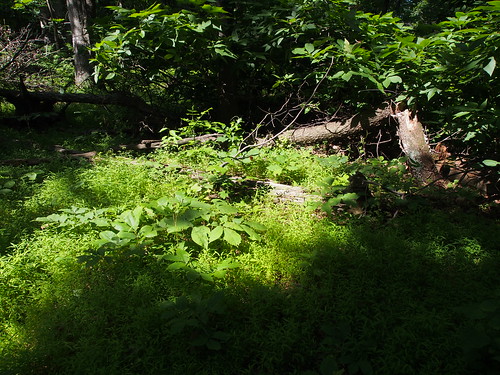
hardwood forest with storm damage

Here is the forest, which after the hurricanes we have had are more open with light gaps from fallen trees, and the invasive Japanese stiltgrass is thriving.  Forests around here have a lot of oaks, maples, and hickories.  Sometimes also tuliptrees.

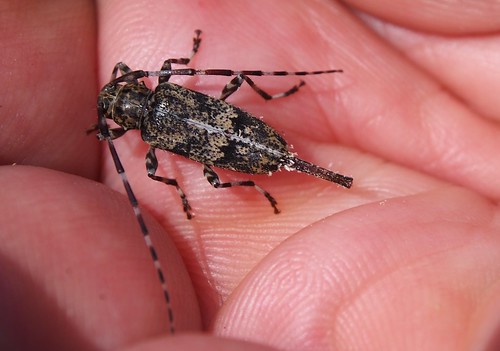
Lonh-horn beetle, Graphisurus fasciatus P6280515

Long-horn beetles are always fun!  This is a female Graphisurus fasciatus, with a egg-laying tube at the back.  In the hand it sat very still, but as soon as we put it back on the tree trunk it scurried off very quickly.

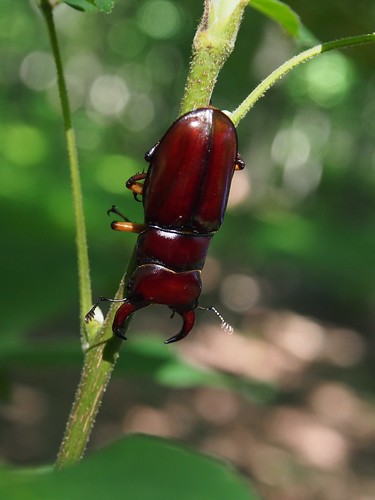
Lucanus capreolus P6280470

This was probably the coolest animal we saw!  A 4 cm long stag beetle (Lucanus capreolus).  They are said to be very common, but I have never seen one before. 

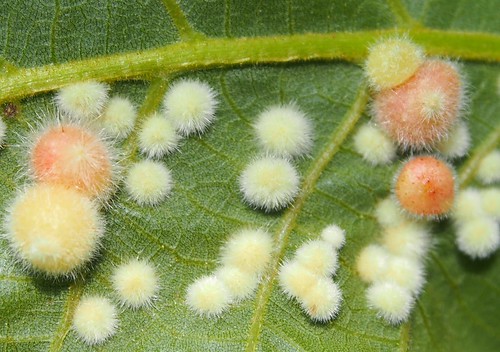
Hickory gall midge Caryomyia P6280519_closeup

Weird fuzzy golf balls?  No, tiny galls on the underside of a shagbark hickory leaf.  Inside each gall is a tiny developing larvae of a fly or wasp, in this case a small fly.

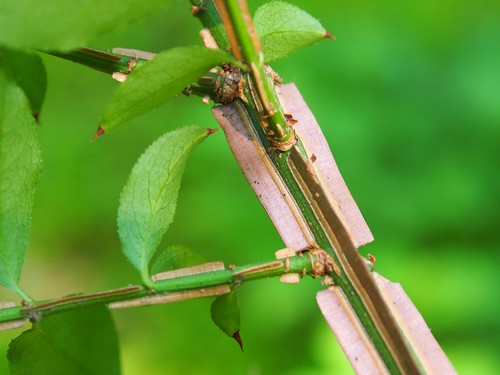
Winged Euonymus P6280504

Some invasive plants are really cool, but people don't like them even if they have fascinating characters.  This is burning bush, also called winged euonymus (Euonymus alatus). Look at those cork lists along the stem!  How can you not love that!?

Aralia spinosa P6280500

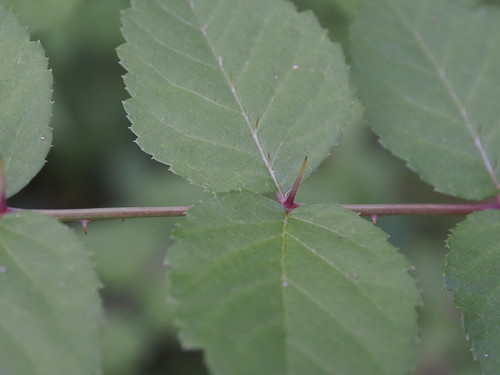
Spiny aralia (Aralia spinosa) has a suitable name.  These spines are on the leaves.  I wonder who it is trying to scare off? 

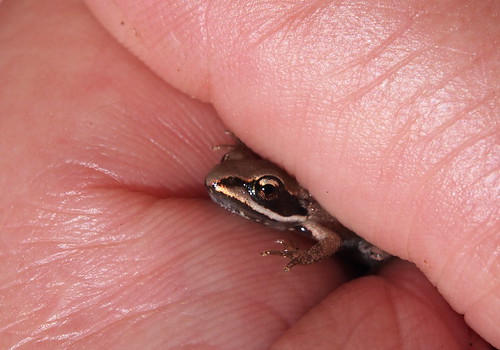
baby wood frog P6280492

One of several wood frog babies we saw.  Don't worry, it is not getting crushed.

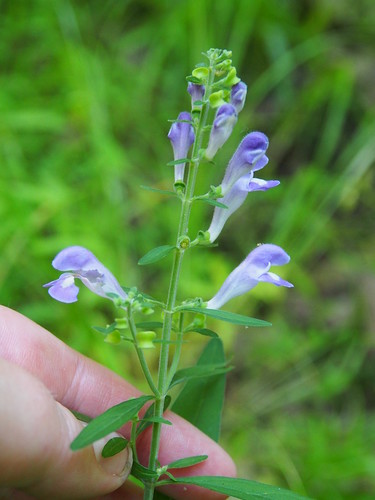
skullcap, Scutellaria integrifolia P6280482

A new species for me, a skullcap (Scutellaria integrifolia).  Look at the flowers, the top part looks like a cap you can put on your head.

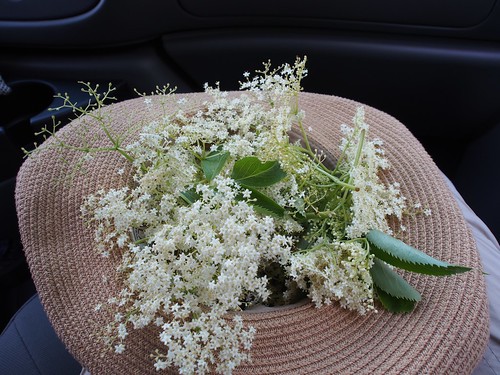
Elderflower collecting P6280582
Towards the end of the bioblitz we saw a big flowering elderflower bush (Sambucus nigra/americana), and I was allowed to pick some of the fragrant flowers in the only thing I had with me, my hat.  The flowers ended up in a jar with lemon peels and vodka and now we have Swedish-style elderflower akvavit in our freezer! Yummy!

Saturday, May 17, 2014

Happy Birthday LS!

Here is a Birthday bug for you!


Aspglansbagge
Chrysomela populi

Wednesday, October 16, 2013

Stamp of the day: Insects and spiders

American insect and other invertebrate fauna is colorful, diverse, and fascinating.  Just here on our place in New Jersey, we have 10+ cm long praying mantises, walking sticks, migrating giant dragonflies and monarch butterflies, large wasp-colored garden spiders, scorpion flies, and a myriad other arthropods.  It is now October, and most of them are gone, but we still here katydids and cicadas in the trees at night.  When there is a warm day, the pesty and invasive brown marmorated stink bugs show up and try to get into our house to hibernate.  We don't see that many Asian lady beetles anymore, they seem to have been reduced in numbers, after their giant invasion a few years ago. There were some years we had to suck them up with vacuum cleaners from the ceiling corners in our living room.  But most insects are not invasive and over-abundant, but form an important piece of the ecosystem puzzle.  Enjoy!
{Sheet of stamps from United States}