Saturday, March 17, 2012
OK snapshot: Ordföljd (word order)
English explanation:
Supermarket sign for dried fruit ('torkad frukt') with the addition 'Endast tillsatt socker' = only added sugar. I bet it should have been 'Endast socker tillsatt' = only sugar added. Sometimes the best order of words is a bit hard to figure out!
Posted by
LS
at
3:33 PM
0
comments
Labels: advertising, food, fruit, language, linguistics, marketing, snapshot, Swedish
Thursday, January 5, 2012
A new word learned: Linkrot
I just saw a new word, and one that makes immediate sense: LINKROT
This is when old web pages and other things online eventually have many non-working links because the pages it links to have changed through time. The web is in flux, it is not a constant thing, like pages in a book. So the links rot away, with time, like a dead tree in the forest.
Posted by
LS
at
10:54 PM
3
comments
Labels: internet, linguistics, new uses, Web
Tuesday, December 6, 2011
Quote of the Day: autospeak from customer care agents
I called the Wells Fargo bank about our mortgage, and got to the wrong department. The friendly, human but slightly automated person offered to transfer me to the mortgage department and I said 'of course, yes please'. She then continued with this phrase:
"If I connect you, will that take care of the reason for your call?"
My mind did a double-take, went into reverse warp speed, hiccuped, and then I said "what?", since the logic didn't work in my brain. She repeated her question, exactly like before. By then I had figured out what the sentence meant and how stupid it was, so I just answered:
"I don't know yet."
Whoever is writing these scripts for customer 'care' people who are answering the phones for companies really need to think a bit more human and logical. How in the melting snow of Antarctica am I supposed to know if a transfer will take care of my problem? How many stressed out people don't even bother to think and just automatically answer 'yes', when confronted with this an unanswerable question? It seems like that the question is there just to provide some positive feedback to the customer 'care' agent.
A while ago I had to call the internet company and was on the phone with someone in the Philippines for half an hour. When the call ended, he entered into the auto-stupid-written-down-speak and said 'thanks for calling Comcast, we are happy we could help you today..', whereby I interrupted and said 'actually, you didn't, the problem is still here and you couldn't solve it'. He then admitted to that at least.
Posted by
LS
at
9:55 PM
2
comments
Labels: business, customer service, internet, language, linguistics, quote
Monday, December 5, 2011
"I Don't Understand What Anyone Is Saying Anymore"
I just read a great thing about the way many people talk today = they talk in a way where it is impossible to understand exactly what they mean. Or even remotely understand what they are trying to say. The article is by Dan Pallotta, was published in Harvard Business Review, and you can read it here. It is really worth to spend a few minutes on this article (it is not long).
Dan Pallotta talks about the five expressions of this epidemic of stupid talking:
Abstractionitis
Acronymitis
Valley Girl 2.0
Meaningless Expressions
Abstract Valley Girl 2.0 Acronymitis Using Meaningless Expressions
I have seen all of these in presentations and discussions, and it often drives me crazy, even if I am guilty of it too. But no longer. But I will still wear my T-shirt (which is on today!) that says "think outside the box" with a drawing of a TV. But I do think we need to get the language we use back to reality.
It is very interesting to ask someone that just has fed you a long sentence of abstractionitis, "So, what does that really mean?" Often, they have no good answer. Which means, they had nothing real to say to begin with. In Swedish, we call this 'ordbajseri'. (That means sort of like 'bullshitting' in Swedish, but more mean.)
Dan's example about 'exceeding expectations' is hilarious. I think most consumers no longer have any (and certainly not high) expectations regarding services and products. The products or services just break or don't work out well. Just ask anybody that is flying with Continental recently, for example. So, exceeding expectations is not really what you want to focus on as a company. How about focus on making products that are not made to break, try to make customers happy and satisfied and not just poor and angry, and have a personal, local touch? Without speaking abstractionitis or acronymitis... :)
What if the people that suffers from these epidemic speech patterns not only speak but also think this way? That would be scary. How can they then reason logically, think straight, and make good decisions? So, back to simple reality, in speech too.
Posted by
LS
at
10:36 PM
4
comments
Labels: business, communication, language, linguistics, lost in translation, psychology, words
Thursday, October 20, 2011
Quote of the Day: calling the smart people at the Collegeboard.com about SAT
I had reason tonight to call the CollegeBoard, the people that administer the SAT, the big dreaded test taken by all American highschool students that want to go to college. These are smart people asking tiny, detailed questions about grammar in their tests.
In the automatic answering system, which guides you to the right place when you call I got this question:
"Are you a parent or a student? Answer yes or no."
OK, I am a parent, but not a student. Do I answer yes or no? I bet someone thought this was a very straightforward question, but I don't think so...
Posted by
LS
at
8:41 PM
0
comments
Labels: college, education, linguistics, quote, USA
Monday, April 25, 2011
Hand-grown avocados
A full-page ad in the most recent Saveur food magazine advertises the 'hand-grown' avocados of a company in California. Now, last I checked, plants grow by themselves, and they don't add cell walls and have cell divisions because a machine or human make those... the plant is growing independently. The company also states that all trees were 'hand-planted'. Now, does that mean that each hole was hand-dug? Or that each tree was lowered by hand into the hole? Or that each tree got a nice hug after being put in the soil? Handmade is one thing, that is something made by hand. But hand-grown? What is that really? Just a new buzzword to fool us into buying their fruits because they sound more natural, local, and true to nature? You know, the fruits could also be hand-sprayed with pesticides. Who knows. The only thing I know is that for a company to afford a full-page ad in Saveur it can't be a little family farm where each fruit tree gets individual attention, by hand or otherwise.
Those were my own hand-thought thoughts of the day. Now I am going to go and sleep by hand. No machines involved at all. And soon my hands will be all hands-off this computer and I will be reading partly hands-free in bed.
Haha - just found this. Handgrown in California is an ad campaign from the California Avocado Association. And in 2009, over 440 000 pounds (that is about 200 000 kg) pesticides were used on California-grown avocados (see link here).
Posted by
LS
at
11:25 PM
1 comments
Labels: advertising, agriculture, California, chemistry, fruit, linguistics, marketing, USA
Tuesday, April 12, 2011
Somewhat to majorly non-sensical, logical, or funny Swedish words
... soppatorsk... (literally meaning 'soup-cod', cod like the fish cod). The meaning is: when you run out of gasoline while driving a car or boat.
...slå en sjua... (literally meaning 'dial a seven'). This is the same for a man as in 'go and pee'. I have never heard a woman say it.
...skitstövel.... (literally meaning a 'boot filled with shit') . Used about a person who is doing something really mean.
And then there are words that make sense but are kind of funny in their fantastic logical construction:
...slickepott... (literally meaning 'lick-the-pot'). Used for a silicon or rubber spatula used in the kitchen to scrape out the last of the dough from a bowl.
...svartsjuk... (literally meaning 'black-sick'). This means envy or envious. Can't you see a person becoming black in his or her face of envy?
....grönsaker.... (literally meaning 'green things'. This is of course vegetables, what else could it have been?
Enjoy!
Posted by
LS
at
10:23 PM
0
comments
Labels: language, learning Swedish, linguistics, words
Monday, April 4, 2011
Spring must have sprung today
OK, spring is here finally in my mind and for real in New Jersey, even if there will be a late April snowstorm. I am sitting outside at a table at an open square in Princeton (using the Princeton Library's fantastic free wireless network), and it is 68 degrees or so (that is 18 degrees in Swedish numbers). Warm soft air, pretty lights on trees, laptop on park table, and a couple of tables away a guitarist is playing the most amazing instrumental pieces, just for fun. Wait, it is a guitarist and a banjoist. Someone is eating grilled fish at the Witherspoon Grill, I can smell it. Kids are running around in shorts and T-shirts, laughing; people are sitting outside restaurants having dinner and a glass of wine. No stars above because we are waiting for heavy rains tomorrow, which hopefully will help our newly moved perennials take off with new roots and growth. Life is lovely. Or as I read earlier tonight in a photo in a library book:
I agree 100%. We should all reclaim the awe. And not overuse the word awesome (which I am guilty of, just as most teenagers of today, but that fad will pass too).
Posted by
LS
at
8:19 PM
0
comments
Labels: books, family life, linguistics, New Jersey, poetry, spring
Sunday, November 21, 2010
All those dots and rings, do they really make a difference?
In Swedish, that is. Yes they do, and when you type on an American keyboard without ä, å, and ö, your Swedish text can become both hilarious and misinterpreted. The a, ä, å, are treated as three different letters in Swedish and they mean very different things; it is not optional to add the diacritical marks when you use these letters in my mother tongue.
Well, it wasn't optional, until computers came into the picture and we all became anglicized (especially me, after living 15 years abroad)... To type "ä" on my laptop keyboard, I have to push two buttons (Fn + Alt), and then typing 0 2 2 8 while still pushing the two original, so six keystrokes in total, and three simultaneous button strokes for each one, for one simple little Swedish letter. On a Swedish keyboard it is just a single keystroke of course. So, I hope my Swedish relatives and friends forgive me for often assuming that they can add the rings and dots to the o's and a's in their heads while reading my ring-free and dot-free Swedish text sent via e-mail. There are a lot of common Swedish words that use these unusual letters (such as "är" for 'is, are').
Here are some examples of Swedish words with and without the umlauts (that is what the dots and rings are called, linguistically), showing the difference those little marks make in Swedish.
vanliga = common; vänliga = friendly
halsningar = swallow (like drinking beer); hälsningar = greetings
slakt = slaughter; släkt = family (extended, including grandmothers and cousins, etc.)
kram = hug; kråm = decorations; kräm = creme, gel, paste
ta = take; tå = toe
laka = leach; läka = heal
lov = vacation; löv = leaf
al = alder; ål = eel
ost = cheese; öst = east
sal = large room; säl = seal
as = dead animal, carcass; ås = esker, long narrow hill
osa = smoke; ösa = bailing, emptying water out of something
sova = to sleep; söva = to put someone to sleep, like anesthesia
lada = barn; låda = box
bar = bar; bär = berries; bår = stretcher
bor = live; bör = ought to
borda = enter, board (especially about boats, like pirates do); börda = weight, burden
aska = ashes; åska = thunder
åra = oar; ära = honor
hora = hore; höra = hear
kar = basin; kär = in love; kår = chill, sudden wind blast
sas = was said; sås = sauce
tal = speech, number; tål = endure
gata = street; gåta = mystery
etc....
I am sure the Swedes here on the blog can come up with even more of these.
"Med vanliga halsningar till hela slakten!" (With common 'swallowings/gulps' to the whole slaughter)
and
also "med vänliga hälsningar till hela släkten" (with best wishes to the whole family)!
Posted by
LS
at
12:01 PM
2
comments
Labels: language, linguistics, Swedish
Tuesday, November 9, 2010
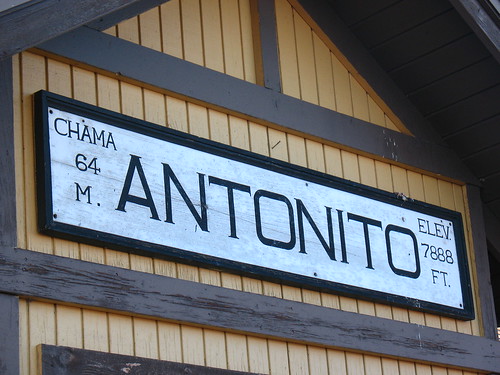
Danger on the rail
Posted by
LS
at
8:38 PM
2
comments
Labels: Colorado, history, linguistics, maps, news, railroad, steam, train, United Kingdom, USA
Sunday, July 4, 2010
LS snapshot: What happened to my car?
Posted by
LS
at
8:47 AM
0
comments
Labels: funny, language, linguistics, New Jersey, signs, snapshot, USA
Thursday, April 29, 2010
Language is not easy...
From a friend of ours:
Posted by
LS
at
9:40 PM
1 comments
Labels: China, language, linguistics
Wednesday, January 6, 2010
New words for real things
Just got a very funny e-mail about the "winners of the Washington Post's annual Mensa Invitational, which once again asked readers to take any word from the dictionary, alter it by adding, subtracting, or changing one letter, and supply a new definition". These are hilarious. Some research on the web tells us though that the newspaper Washington Post has no such real competition, however, they are playing along. Apparently this list has circulated on the internet for many years, with readers adding new definitions along the way. Anyway, some of these new words and definitions are very funny. I think bozone might be my favorite, or maybe Belzebug. Here you go, enjoy:
Cashtration (n.): The act of buying a house, which renders the subject financially impotent for an indefinite period of time.
Intaxication: Euphoria at getting a tax refund, which lasts until you realize it was your money to start with.
Reintarnation: Coming back to life as a hillbilly.
Bozone (n.): The substance surrounding stupid people that stops bright ideas from penetrating. The bozone layer, unfortunately, shows little sign of breaking down in the near future.
Giraffiti: Vandalism spray-painted very, very high.
Sarchasm: The gulf between the author of sarcastic wit and the Person who doesn't get it.
Inoculatte: To take coffee intravenously when you are running late.
Karmageddon: It's like, when everybody is sending off all these really bad vibes, right? And then, like, the Earth explodes and it's like, a serious bummer.
Decafalon (n.): The gruelling event of getting through the day consuming only things that are good for you.
Glibido: All talk and no action.
Dopeler Effect: The tendency of stupid ideas to seem smarter when they come at you rapidly.
Arachnoleptic Fit (n.): The frantic dance performed just after you've accidentally walked through a spider web.
Beelzebug (n.): Satan in the form of a mosquito, that gets into your bedroom at three in the morning and cannot be cast out.
Caterpallor (n.): The color you turn after finding half a worm in the fruit you're eating.
Posted by
LS
at
8:07 PM
1 comments
Labels: coffee, insects, linguistics, medicine, news, physics, taxes, USA
Tuesday, November 17, 2009
Stamp and Food of the day: Cucumbers

Pickles a la Sweden! There are many types of pickles ('inlagd gurka') in Sweden, but none are called full sour, half sour, or dill pickles like in the US. Instead the two most common types are 'saltgurka' (salt pickled) and 'ättiksgurka' (vinegar pickled). Now, both types have salt and vinegar in the brine, so it is just a matter of proportions. Mustard seeds, dill flower crowns, and other spices are common, and my favorite recipe for homemade pickles is one my mom has given me.
This photo shows my daughter's favorite kind from our Sweden trip this summer - Mother Anna's thinly sliced pickles (Mor Annas tunnskivad gurka). [Question to Swedes, shouldn't it be 'Mor Annas tunnskivadE gurka' in proper Swedish?]. 'Gurka' means cucumber, and must be from the same root word as gherkin, the English word for tiny little pickled cucumbers. The word cucumber comes from the old Latin or Greek since the genus name is Cucumis. Cucumbers are a kind of berries with a leathery skin, and are placed together with pumpkins, squashes, and melons in the Cucurbitaceae family.
(Stamp from the island of åland, between Finland and Sweden in the Baltic Sea.)
Posted by
LS
at
7:10 AM
2
comments
Labels: botany, cooking, food, linguistics, photo, stamps, Sweden
Monday, October 19, 2009
OK snapshot: pome grenade
(this is funnier in Swedish, since pomegranate is called "granatäpple" [grenade apple])
Snapshot by OK.
Posted by
LS
at
7:34 AM
0
comments
Labels: food, linguistics, photo, plants, snapshot
Wednesday, May 20, 2009
New Series: Bad Aftonbladet Day - BAD
I have to admit to a not-so-secret secret: I am an avid web reader of the evening newspaper Aftonbladet online, mainly because they have the best and fastest Swedish news on their award-winning website (aftonbladet.se). Unfortunately it is mixed in with lots of not so newsworthy noise from the entertainment area, diet frenzies, sports, and advertisement, and is therefore considered a less than great newspaper by my Swedish relatives (' en ren blaska'). It is the most read newspaper in Sweden (2.3 million online readers per day). In Sweden, it is the most visited website after MSN. Which leads me to my pet peeve...
One thing that drives me crazy is the lack of proofreading in this paper, and especially the lack of spell and grammar check on the main home page. Therefore, with glee, and with absolutely no empathy for summer substitutes without a degree from journalism school that will be in charge in a few weeks on AB, I will start posting some of the typos, grammar issues, and simply hilarious sentences you can find at this newspaper. It will be in Swedish, not much to do about that.
"Palentologen om världshysterin kring Ida" Vad hände med det tredje o:et i Paleontologen? Dog det ut? (link) {haha, while I was writing this, they corrected it!}
"EU-valskolan del 4 – de de har störst makt i EU" De de? Stammande journalist?
Sedan har de en del som bara är roligt eller konstigt:
Möt mystiska korvmän. [= Meet strange sausage men]
Fick ett ägg upptryckt i ansiktet - 18 personer omhändertagna
Posted by
LS
at
3:31 PM
0
comments
Labels: funny, language, linguistics, news, Sweden