Showing posts with label Europe. Show all posts

Monday, November 26, 2012

Stamp of the day: Roasted dinosaurs


Last week was Thanksgiving, this best of holidays in USA.  No presents, just good food and company.  And central to the food is the turkey, which is of course a bird.  And birds are just a kind of living dinosaur.  It is not that birds evolved from dinosaurs, but birds actually ARE dinosaurs.  That is what the most up-do-date science tells us.  So, have you had any good dinosaur meat recently?  We had chicken for dinner, yummy, dinosaur flesh!

The stamp is of course a roasted chicken with some other Czech (I think) food specialties, like beer (which is a food, according to some). 

Friday, December 23, 2011

Stamp of the Day: Pomegranate

Pomegranate (granatäpple in Swedish, Punica granatum in Latin) is a wonderful fruit.  It has hard seeds surrounded by fleshy, bloodred juicy arils, nested inside a labyrinth of white placental flesh (it is actually called that, botanically). Nobody really knows where it grows wild, maybe on the tiny island of Socotra in the Indian Ocean, but it has been cultivated and eaten by humans for thousands of years.  We open the fruit, squeeze out the seeds over a bowl (so you don't get red juice all over you and your kitchen), and then put the seeds in salads.  For Christmas Day dinner we are having a turkey, served with balsamic-pomegranate glazed carrots.  Those carrots are to die for....   In case you didn't know it, the apple in the Paradise in the Bible most likely was supposed to be a pomegranate, but when they translated it into English for the northerners, nobody knew that fruit up in the cold north, so it became apple instead.

Monday, August 8, 2011

When in Maine, this is the Main dish...

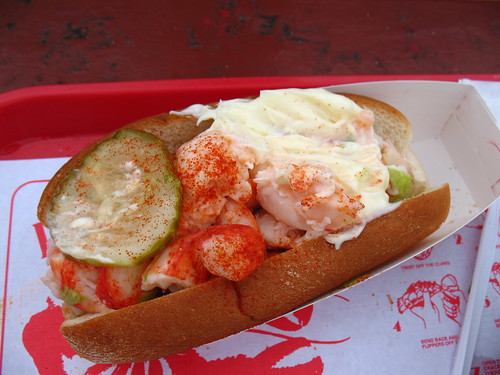
Lobster roll, a Maine speciality

A lobster roll, a fantastic invention.  Cooked lobster meat stuffed into a bread roll (like hot dog roll, but split on the top, not the side), with some mayonnaise and some dusting of paprika.  Eat.  Simple. Good. Amazing.

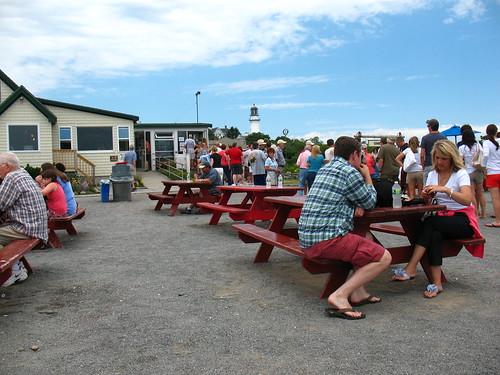
waiting for Lobster rolls
We had our only lobster rolls at the Lobster Shack at Two Lights, near Cape Elizabeth south of Portland on a dead end road that ends in a parking lot that immediately becomes too full and too crowded on summer days.  But it is worth it.

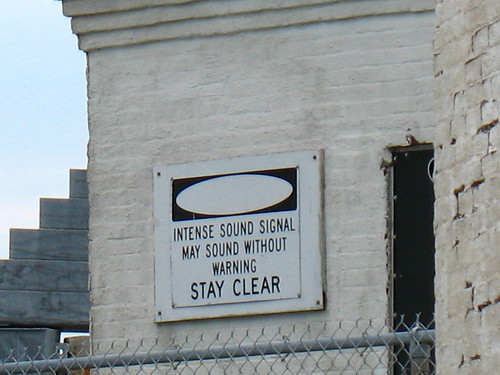
fog horns can be loud
 It is a little restaurant perched on the cliffs near the sea, and the closest building houses a fog horn (with appropriate signs to watch out for the sound, but how can you do that?  Doesn't it hit you when it hits you, without warning? Or does it sound a warning before, heh!?). The fog horn was on the day we were there, sounding its eerie warnings out in the fuzzy fog of the ocean.

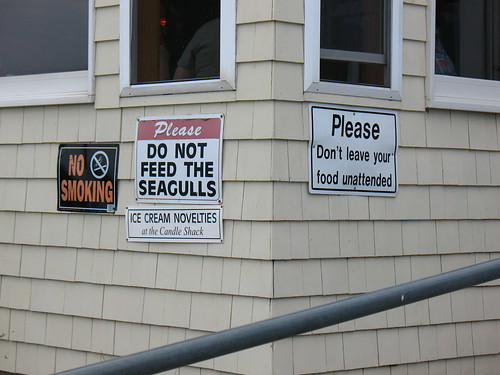
sea gulls are ferocious
There are other warnings too, near the shack itself, since it is surrounded with highly adapted ferocsiouly behaving seagulls that have mastered the feats of 'getting the lobster before the human'.  Hold on to your food, or someone else will.

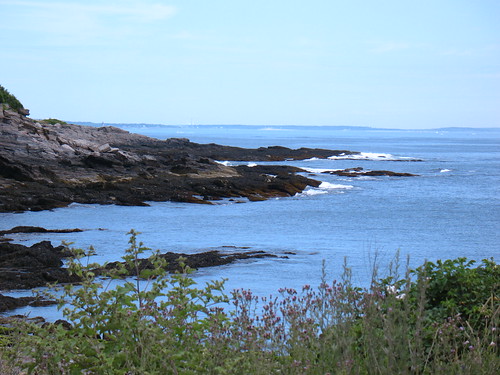
ocean in Maine
The best thing with Maine are the rocks and the coastline.  Granite and shale cliffs, rounded by the ice ages' massively thick glacier covers, and now with lichens and seaweeds as the only plant cover.  The feel is very similar to parts of Norway (without the mountains) and the west coast of Sweden (Bohuslän).  I love it.

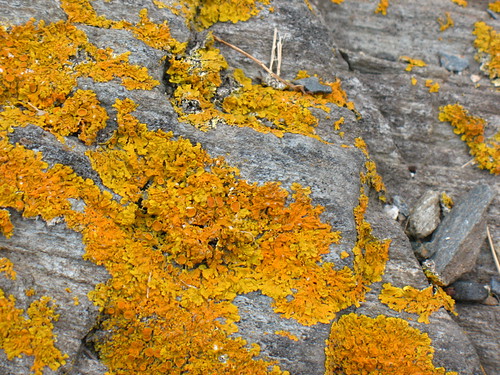
Xanthoria lichens
This yellow lichen (Xanthoria) are typical for these coasts, and if I ever would be a painter I would paint giant closeups of imagined lichen macro images. 

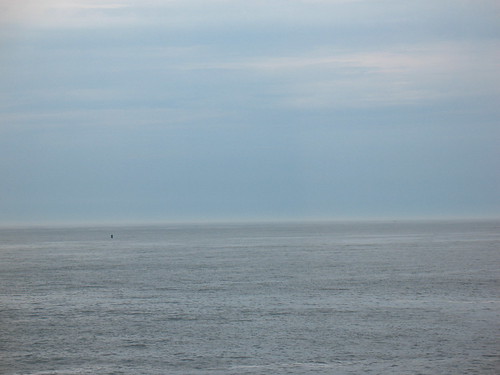
ocean and sky and nothing more
And out there in this direction, are Scandinavia and England.  Far away from Cape Elizabeth, Cape Cod, Nantucket and Cape May, but certainly, Europe is there. Even if it is invisible.  Don't you ever wonder how we can be convinced of such things before we have experienced them?  We have to believe the invisible until we have sailed, flown, or swum there.

Monday, June 20, 2011

Stamp of the Day: Can you see the stars?

Maybe not, it depends on where you live.  And soon you might not see many stars in most places, due to light pollution.  There is a great article about this on Design Observer: Starry Night. The most stars I have seen recently were in Costa Rica.  It is amazing to think that all those thousands of stars are here in New Jersey too, but we flood them out with lights.  Our township, for example, have parking lights on at the highschool even in the evening when nobody is there.  Neighbors sleep with floodlights on.  Princeton glows with a pink haze some nights. Imagine how many northern lights are being missed because of our electricity obsession. Most of those lights are just wasted electron movements created by coal, oil, gas, or nuclear power.  The article is great, and a good read, so take a look and check out the maps too (Europe included).

Stamp of the day are two Swedish stamps from 2009, a star map with the Crab Nebula and a polarimeter.  Nice designs as usual from the Swedish postal service. (Information in Swedish about these stamps)

Sunday, June 5, 2011

Stamps of the Day: Knitted mittens

I was looking around on the internet for stamps with knitting, and there sure aren't many that I could find.  But there were two, and gorgeous knitting on them as well.  Latvia has issued two stamps with traditional knitted mittens in multi-color knit, very similar to traditional Scandinavian mittens.  I made one pair like these a long time ago, but I haven't seen them in years.  I have a feeling there were lost at some train maybe 20 years ago.  I love the design, except for that a lot of cold air comes in through the wide wrists, but you can make it tighter there if you like by changing the design (but then it isn't so authentic... so beware, if you care about such things). When I was a kid, if you were wearing mittens like these ones you were decidedly uncool, but these days they are a fashion statement, at least in some circles.  Or, rather, maybe not a fashion statement, but a political and life statement.  You can't make these mittens in machines, they have to be handmade.

Monday, May 23, 2011

Volcano alert: Grimsvötn

For our readers away from Iceland and Scandinavia, in case you haven't heard:

Large parts of Iceland are covered with ashes from the eruption at Grimsvötn on Iceland. The vulcano is located right under Europe's largest glacier, and once again nature shows its absolute power.   The ash cloud is on its way to Scandinavia and southern Europe. (some photos here)

Monday, May 16, 2011

Stamp of the Day: Frans G Bengtsson

In Swedish literature there is ONE great book about the Viking age you should all read if you like reading.  Röde Orm (Red Orm = Red Snake, but also known as The Long Ships in English).  This is a tale of vikings as traders as well as marauders, and it takes place all across Europe and is supposedly rather historically correct.  Part of it takes place when one of our (possible) ancestors Harald Bluetooth was King of Denmark.  This book has been elected as one of the top ten best books in Sweden, ever.

The author was Frans G Bengtsson, and he is depicted on this Swedish stamp together with typical Viking longships. The book, which is in several volumes, was written during World War II and Frans made a political point in the book on how the Vikings allied themselves with Jews over a thousand years earlier. He tried to simulate the language in the book after the old Nordic sagas, with their terse sentences and usually not very elaborate descriptions of people and places. 

The 1960s movie Long Ships was partly and loosely based on this book, but I haven't seen it.  But they are planning a real movie on the book now, and the director was quoted as saying "It will be like Lord of the Rings".  Except of course that Vikings did happen. And Vikings had gold rings too, and there were smart women with long fine hair (but no pointy ears) not only in Tolkien's books.  I hope they get a huge Hollywood budget to make this Viking movie. 

Monday, October 11, 2010

Maybe the best sandwiches in the world?

Sometimes I get really homesick for Swedish food.  I was just downstairs in the kitchen and opened the fridge and thought about the Swedish things that are great but hard to get here in the US.  So here you go, my list of the best traditional Swedish sandwich toppings (smörgåspålägg [ha, there is a Swedish word for you Americans to master!]), in no particular order (they are all amazing).  I know, some of you will not agree, feel free to comment. :)

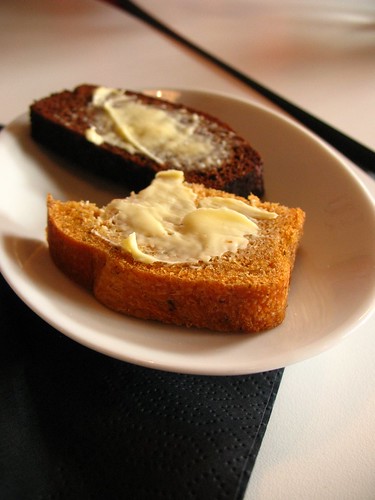
    bread at restaurant P2
- Arboga leverpastej med inlagd gurka (Arboga liverwurst with sliced dill pickles) (photo)

- Skivat hårdkokt ägg med Kalles kaviar (Sliced hardboiled egg with smoked creamed fish roe) (photo)

- Skivat hårdkokt ägg med ansjovis (Sliced hardboiled egg with anchovy-pickled herring sprats [these are not real anchovies]) (photo)

- Skivad kall kokt potatis med kaviar (Sliced boiled cold potatoes with smoked creamed fish roe) (photo)

- Smörstekta kantareller (Wild-collected yellow chanterelles fried in butter) (photo)

- Räksmörgås (Shrimp sandwich, with little tiny pink shrimp, mayo, sliced boiled egg, lettuce, thinsliced lemon) (photo)

- Rökt renkött med pepparrotsvisp i tunnbröd, renklämma (Smoked reindeer meat with creamed horseradish in thin bread) (photo)

- Greveost och rökt skinka med färsk röd paprika  (Greve cheese and smoked ham with fresh sliced red pepper)

- Gravad lax med senapssås och dill (Gravlax/Brined salmon with mustard sauce and dill) (photo)

- Köttbullar (kalla) med rödbetssallad och sallad (Cold meatballs with beet salad (with youghurt or sour creme) and lettuce) (photo)

- Gratinerad varm smörgås med allt möjligt, kantareller, ost, tomater, osv. (Oven-broiled sandwiches with different toppings, such as chanterelles, cheese, tomatoes...) (photo)
    Swedish sandwiches are always open-faced (no bread on top), with things falling off them when you eat them.  That is just the way it is.  The bread can be any kind. You can make a double sandwich if you have to transport it somewhere and eat it for lunch but otherwise it is not common.

    We Swedes have much less toppings on a sandwich than Americans (well, we used to, I think Swedes are becoming richer and add more nowadays).  I only think Dutch people have less. And they put butter, chocolate sauce and chocolate sprinkles on their breakfast sandwiches.

    We don't cut off the crust and make little triangular double sandwiches with white mush in them like the Brits (I do like these too, but they are for people that are afraid of getting messy).

    We don't overload giant subs and heros with salamis and other meats like American-Italians (which can be great to eat, but isn't Swedish). Ever heard of a muffaletta?  They are giant. Giantly tasty too.

    We don't make peanut butter and jelly sandwiches, a combination I personally think is kind of... disgusting.  Each one by itself is quite fine.

    We don't make smörrebröd, that is the Danes specialty (overloaded warm or cold sandwiches you have to eat with a knife and fork - also delicious).

    Sometimes Swedes invent crazy sandwich topping combinations.  I have a vivid memory of a cousin, who will rename unnamed, who ate a sandwich with cheese, kaviar, and orange marmalade. And here is a crazy one too!

    So, what is my favorite breakfast sandwiches here in the US?  Well, since there aren't some of the Swedish things...  smoked ham, cheese and Frank's Hot Sauce...  cottage cheese and fox point seasoning...   hummus....  goat cheese...  sliced cold potatoes and kaviar (everybody else in the house thinks I am crazy to eat that)...  sliced egg and real anchovy...  marmalade....  blueberry jam (homemade, more about that later)...  cheese and pickles, or cheese and sundried tomato tapenade...

    Tuesday, October 5, 2010

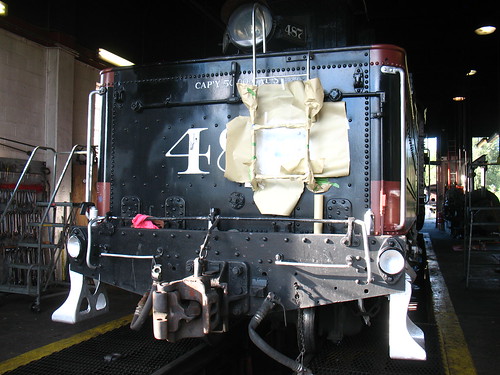
    bumpers, couplers, hooks and trains


    Here is an old Swedish box car with a typical European 'bumper' - these come in pairs and prevent the cars to crash into each other. The coupler that hooks the train together is also different from the American ones (see below).

    locomotive 487, new paint
    American tender car without a bumper, just a giant coupler to pull the train with.

    I hope this is correct, if not, PP can correct the facts. :)

    Monday, December 14, 2009

    The last trip was today...

    .. for the Orient Express. It is no more. It used to go from London (or Paris, or other western cities) to Istanbul (or other eastern cities), through the then volatile and dangerous Balkan countries. So, all we have now is James Bond on the train in the movies, murder stories by Agatha Christie, or numerous mentions of the train in everything from Star Trek to Mutant Ninja Turtles. I would have loved to go on this train about 100 years ago, wouldn't you?


    The first train left France in 1882 and had and served:

    "The train was composed of: 1. Baggage car, 2. Sleeping coach with 16 beds (with bogies), 3. Sleeping coach with 14 beds (3 axles), 4. Restaurant coach (nr. 107), 5. Sleeping coach with 14 beds (3 axles), 6. Sleeping coach with 14 beds (3 axles), 7. Baggage car (complete 101 ton).

    The first menu on board (October 10, 1882): oysters, soup with Italian pasta, turbot with green sauce, chicken ‘à la chasseur’, fillet of beef with ‘château’ potatoes, ‘chaud-froid’ of Game animals, lettuce, chocolate pudding, buffet of desserts."


    Wednesday, November 4, 2009

    Witches' import


    Seen at the local supermarket here in New Jersey - handcrafted Witches' Broomsticks made in Estonia from birch branches being sold for Halloween. If these made it here, in container ships I bet, I wonder how many are being sold and how much of the Estonian forest that is cut down. Not very sustainable to shop these across the world. At least it is not plastic. And you even get a pilot license when you buy one!

    Saturday, September 15, 2007

    As to the Stone Age and my holiday

    My history books does not really talk about stone age but rather a 'western neolithic zone' (there are six of zones in Europe evidently) encompassing the western edge from southern Spain to the British Isles, Scandinavia and Iceland. They are characterized by vast constructions from dolmens, menhirs to huge chambered tombs, stone avenues and stone circles. Not small round stones.

    Then there seems to have been a Chalcolithic Age to describe the long transitional phase when Stone and Bronze Ages coincided. The onset of the Bronze Age began in the Middle East 3000 BC and in Europe perhaps a 1000 years later. Some great civilization during that period. But somehow the Bronze Age and its cultures suffered a breakdown - trade disrupted, cities abandoned, cultivation decreased, invasions.

    Iron working begun in Asia Minor and spread to Egypt (c.1200 BC), the Aegean (c.1000) and the Danube basin (c. 750BC). Evidently the Iron Age is normally divided into two periods. The first was c.750-400 BC and a second 400-50 BC, named after two important sites (Hallstatt and La Tène respectively). At that point some written sources and traditions (names of places etc.) begin to appear.

    My history book then turns its attention to the Greeks and the Romans and the Mediterranean and the Middle East areas. During that period tribes in the north certainly traded and learned the ways of dealing with metal and other useful things. So when the Romans ruled the Mediterranean and European central lands iron tools and weapons were of course also known in the north.

    The Vikings seem to have been a wild sort. The 'Norman' appeared in Europe from around 700 and raided the British Isles repeatedly, e.g. ransacking Lindisfarne (a Celtic Christian monastry a bit north of where I live) in 793. This they did by seasonal raids with boats. Later they set themselves up permanently in big camps where they stayed over winter and in some cases these camps led to settlement. The Danish Vikings looted the French coast and northern France and western England. The Norwegians were dominant on the west coast where we live and the outer islands. The Swedes operated on the Baltic and eastwards in the Russian lands. The Viking domination and ravage was quite extensive really and stretched from the Black Sea in the east to Iceland in the west and France in the south. Even Sicily was for a time under Norman rule.

    I don't think that the Vikings had much use of round stones really and the Vikings have nothing at all to do with the Stone Age. They rather belong to the early Middle Ages if you want to put them in a European perspective.

    My summer holiday begins today and for me holidays is about traveling, pictures and reading. I have been looking around in my bookshelves to see what engages me and what is there to read (many of the books I have I have not read!). It looks like it could be reading about Europe: the history and/or its present politics. As to traveling Eve and I will see friends in southeastern England and will probably try to see some gardens and other historically interesting things - cathedrals and the like. As to pictures I hope to be back.

    But we will also be at home and work with the garden (Eve), boat models (me) etc.

    Olle