Saturday, March 1, 2014
Tuesday, June 11, 2013
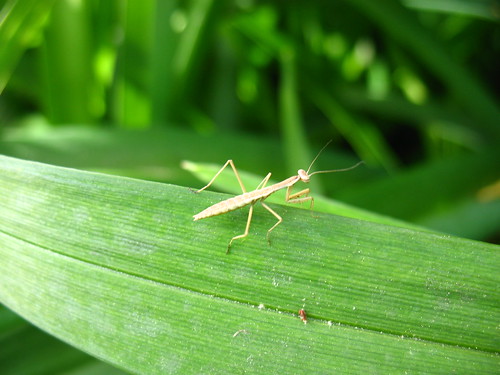
Garden update from New Jersey: baby mantis and poppies
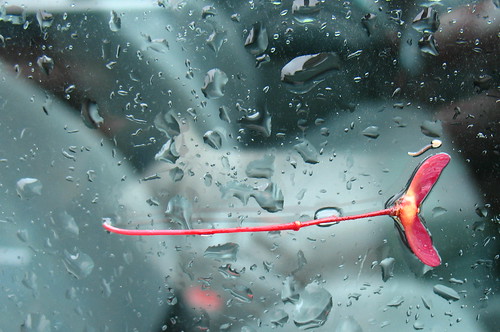
We have had too much rain already. But the plants love it. In the last week we have had 7 inches of rain, which is nearly 200 mm. The fruit on my car window is an immature red maple samara.
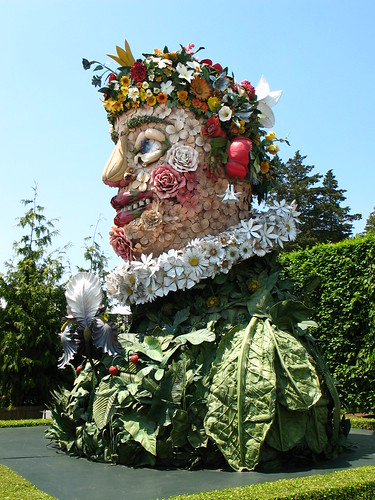
AREA and I went to The New York Botanical Garden a few weeks ago. Philip Hass has an exhibit there where he has made giant, oversized sculptures inspired by Arcimboldo's The Four Seasons. What do you think? We weren't too impressed. Gaudy and overblown, I think. It also looks like a plastic flower arrangement. (more photos here)
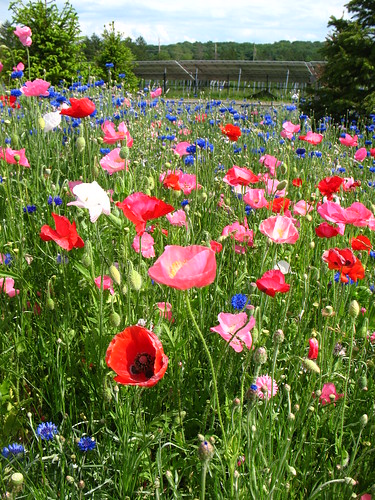
And, among the nicest things our town has done recently is the installation of solar panels by each school, and, the sowing of wildflower seeds around their newly planted trees. Here are the weedy cornflower and poppies flourishing, with the solar panels in the background. People stop and take photos, just like we did. This is so much nicer than green, sprayed, sterile, lawn.
Posted by
LS
at
10:10 AM
0
comments
Labels: Alt energy, animals, art, flowers, fruit, garden, insects, New Jersey, New York City, sculpture, weeds
Sunday, August 5, 2012
Efterrätten!
Posted by
EH
at
3:29 PM
1 comments
Saturday, June 23, 2012
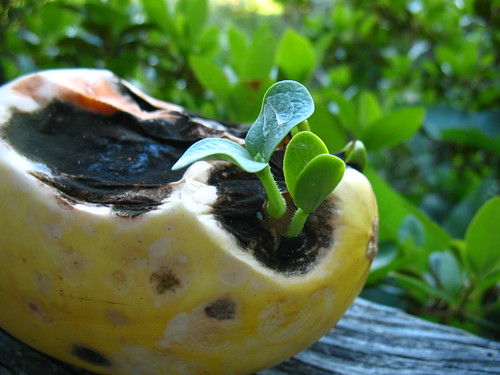
Nature's own planting bowl
As seen, here at home...
Posted by
LS
at
1:23 PM
2
comments
Labels: agriculture, botany, food, fruit, gardening, New Jersey
Monday, June 18, 2012
Banana Peel Trucker Hat (For Bananas)
I just had to share this with you! Isn't it great!?
Photo by Laser Bread (Brock Davis) on Flickr (and copyrighted so don't steal it).
Posted by
LS
at
7:48 PM
0
comments
Wednesday, March 28, 2012
Spring has sprung, seriously!
Posted by
LS
at
10:16 PM
0
comments
Saturday, March 17, 2012
OK snapshot: Ordföljd (word order)
English explanation:
Supermarket sign for dried fruit ('torkad frukt') with the addition 'Endast tillsatt socker' = only added sugar. I bet it should have been 'Endast socker tillsatt' = only sugar added. Sometimes the best order of words is a bit hard to figure out!
Posted by
LS
at
3:33 PM
0
comments
Labels: advertising, food, fruit, language, linguistics, marketing, snapshot, Swedish
Friday, December 23, 2011
Stamp of the Day: Pomegranate
Sunday, October 9, 2011
Stamp of the Day: Vallmokapslar (poppy fruits)
Posted by
LS
at
9:32 PM
0
comments
Wednesday, August 17, 2011
Stamp of the Day: Tomato
Just a plain old tomato on a Mexican stamp. But not so plain and not so old - imaging food without tomatoes... that would not be as much fun and taste.
Posted by
LS
at
8:16 AM
0
comments
Labels: food, fruit, Mexico, stamps, vegetables
Tuesday, August 16, 2011
Tomatoes! Hundreds! What to do?
Warning, this is a very RED post.
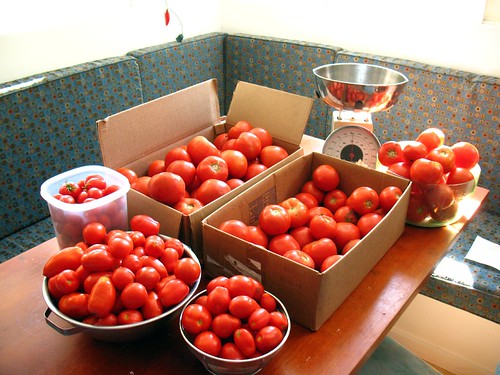
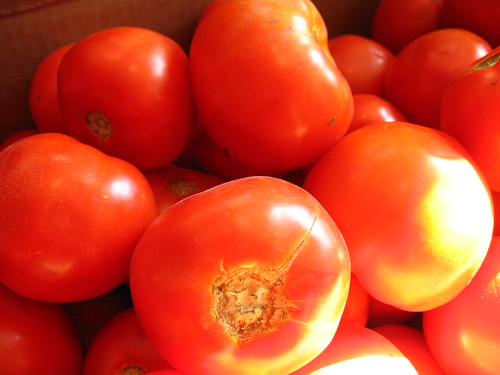
Last week at our pickup of the weekly ration of vegetables and herbs from our CSA (Griggstown Quail Farm and Market, thank you!), we were allowed to take unlimited amounts of tomatoes. Nice, red, big, firm, juicy tomatoes, rather enormous and perfectly fine. So, LA and I packed up two giant boxes of about 20 lbs (c. 10 kg) each. We also had plum tomatoes Roma and San Marzano) at home from our own garden, about 15 lbs, and some heirloom tomatoes for slicing in salads, and 5 liters of small plum tomatoes from the CSA. So what do to with so many tomatoes? Well, this is what we did (and we still have tomatoes left).

For good spaghetti sauce, you take your tomatoes...

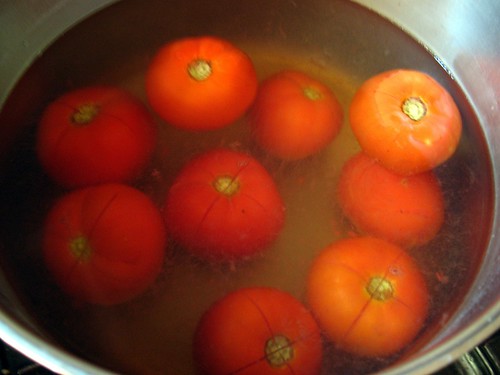
Cut a cross in the end with the stalk and throw them in boiling water for 2 min, then dump them in ice water...

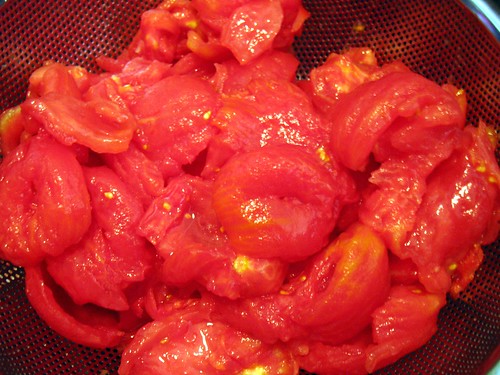
...so you can peel them easily and remove the seeds. (This is not an absolutely necessary step, but if you do this then you don't have to run the sauce in a blender to get rid of skins, and all the liquid that is around the seeds don't need to be reduced down to get a thicker sauce.)

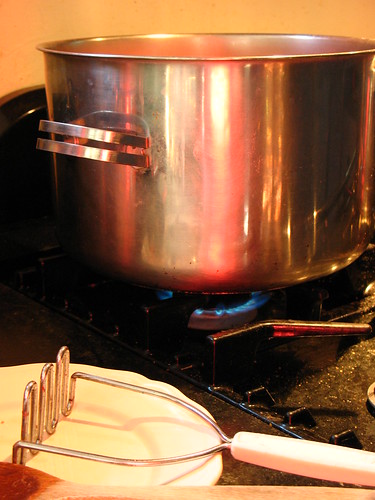
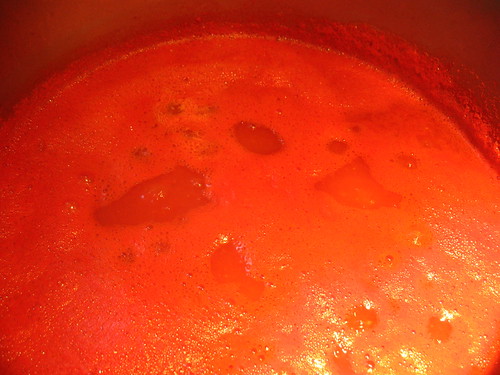
Boil sauce.

Boil sauce more. Hours. Add herbs.

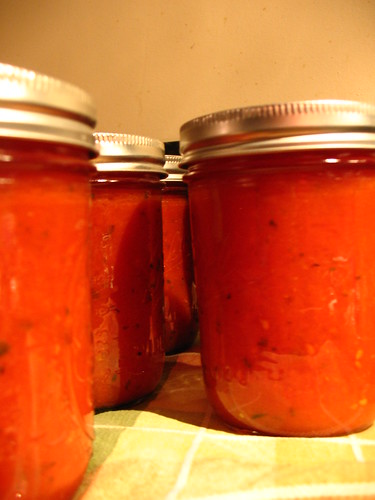
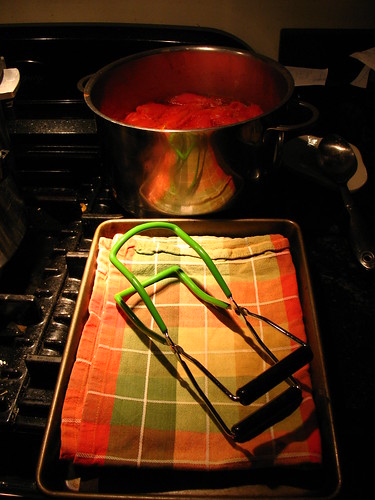
Can. Result: 5 liters (10 jars of 2 cups each) of vegetarian spaghetti sauce, from peeled and seeded beefsteak tomatoes, canned and sterilized so it can be stored at room temperature.

We also cooked 3 liters of seeded and peeled Roma and San Marzano tomatoes for canning (which failed, the large jars didn't seal, so we froze this instead).

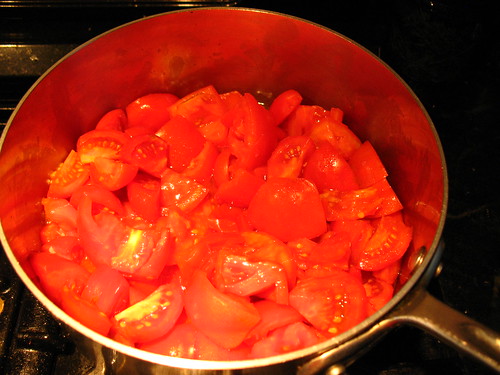
We also made pizza sauce from fresh cut up tomatoes with fresh basil for our Friday night pizza. Yummy.

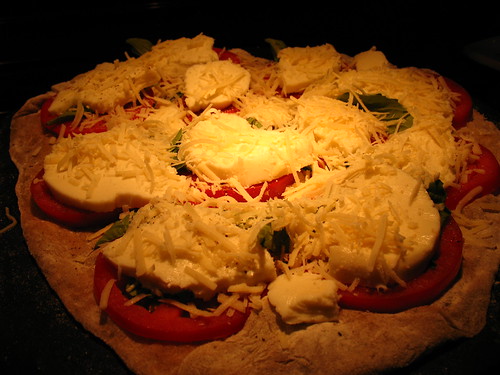
Putting sliced fresh tomatoes on pizza instead of sauce. Next time, put the tomatoes on top of the cheese, or the pizza will be too soggy. But it tasted fantastic.
We also had tomato salads, made sundried tomatoes in the dehydrator (hint, it takes longer than normal if you do it on the rainiest day in 100 years!), made grilled sandwiches with tomatoes and cheese, made tomato soup... and we still have more tomatoes to go, and will get more on Thursday. What a treat! And these tomatoes taste so good, not like the store-bought long-distance ones that taste nothing or wrong.
Posted by
LS
at
10:15 PM
0
comments
Labels: canning, food, fruit, gardening, home cooking, local, sustainability, vegetables
Thursday, June 30, 2011
JU snapshot: H20 melon
chemistry. Photo by JU in Stockholm.
Posted by
LS
at
8:36 AM
0
comments
Thursday, June 23, 2011
Bits and pieces from the internet: Scandinavia edition
It is strawberry season in Sweden. And Swedish strawberries are local, red all the way through, and much tastier than any strawberry you can buy in a store here. Only at the farmer's markets can you find anything like it in the USA. Story from Serious Eats here.
The vikings Erik the Red and his son Leif Eriksson had amazing lives and journeys. You can read about them here on this website about stamps, with great philatelic illustrations. Their viking boats are also featured.
If you read Swedish, I highly recommend Olle Wästberg's monthly newsletter about issues in culture and politics that connect USA and Sweden. He served as the Swedish consul in New York for several years, and has worked very had on promoting Swedish design, music, art and theatre and other export industries. You can sign up on his website.
Not one but TWO hotels from Sweden were featured among these crazy places to stay. Which hotel would you pick? The sewage pipe ("cardboard box! you were lucky!"), tree house, or ice hotel?
Saturday, May 21, 2011
Monday, April 25, 2011
Hand-grown avocados
A full-page ad in the most recent Saveur food magazine advertises the 'hand-grown' avocados of a company in California. Now, last I checked, plants grow by themselves, and they don't add cell walls and have cell divisions because a machine or human make those... the plant is growing independently. The company also states that all trees were 'hand-planted'. Now, does that mean that each hole was hand-dug? Or that each tree was lowered by hand into the hole? Or that each tree got a nice hug after being put in the soil? Handmade is one thing, that is something made by hand. But hand-grown? What is that really? Just a new buzzword to fool us into buying their fruits because they sound more natural, local, and true to nature? You know, the fruits could also be hand-sprayed with pesticides. Who knows. The only thing I know is that for a company to afford a full-page ad in Saveur it can't be a little family farm where each fruit tree gets individual attention, by hand or otherwise.
Those were my own hand-thought thoughts of the day. Now I am going to go and sleep by hand. No machines involved at all. And soon my hands will be all hands-off this computer and I will be reading partly hands-free in bed.
Haha - just found this. Handgrown in California is an ad campaign from the California Avocado Association. And in 2009, over 440 000 pounds (that is about 200 000 kg) pesticides were used on California-grown avocados (see link here).
Posted by
LS
at
11:25 PM
1 comments
Labels: advertising, agriculture, California, chemistry, fruit, linguistics, marketing, USA
Tuesday, March 8, 2011
Gorgeous: Inlagd gurka (pickles)
Can pickles be gorgeous? Well, they can be gorgeously good, especially if you make them yourself or eat the one's mom made. There should be dill and garlic and maybe mustard seed in the brine. Last year I 'only' made about 22 jars of pickles, and it wasn't enough. We are running out and have maybe only 5 jars left at the most and there are months to when the cucumbers start growing again. I am going to plant the cucumber plants in the spot where the compost bin was, I think they will love that soil. I just need to make a little raised bed and fill in some more soil, and build a giant trellis for them to climb on. No problem, I still have some time...
Funny fact: 'inlagd' means not only pickled in Swedish but also admitted, such as 'he was admitted to the hospital' (= "han var inlagd på sjukhuset").
Posted by
LS
at
12:03 PM
2
comments
Labels: canning, food, fruit, gardening, home cooking, homemade, New Jersey
Monday, February 14, 2011
Recipe - almond apple cake from Rosendal
My mom gave us a wonderful cookbook, The Garden Cafe at Rosendal, which is filled with recipes, photos and stories from the organic garden and cafe Rosendal on Djurgården in Stockholm. For Valentine's Eve I made one of the recipes, Apple Cake with Almond, with some slight modifications (I didn't put shaved butter on top, like the recipe says). It was dense, luscious, and delicious.
Ingredients (American measurements):
5 eggs (an egg is an egg in the US too!)
3/4 cups granulated sugar
1/2 cup vanilla sugar (can be bought at IKEA, if you don't have it, use confectioners sugar and two drops of vanilla extract)
5 oz almond paste (look in the baking section of the supermarket, Odense is a good brand)
2 tbsp cinnamon (we had extra strong cinnamon so I used only 1 tbsp)
1 3/4 cups white flour
4 large apples (I used 2 green and 2 bright red, organic is best, do not peel)
1/2 cup (or less) pearl sugar (can also be bought at IKEA)
5 tbsp butter (I didn't include this, too many calories... but it makes the cake more moist and fresh...)
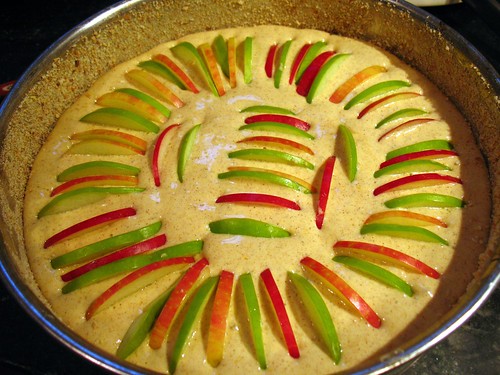
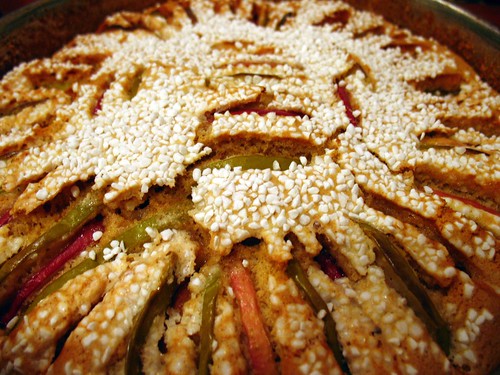
Turn on oven to about 375 degrees F. Whisk the eggs, granulated sugar and vanilla sugar a lot so it turns into whitish foamy mix. Grate the almond paste using a cheese grater (large hole size), and mix in separate bowl with flour and cinnamon. Add the egg mix, mix in slowly. Cut apples in half, core them, and then slice very thinly. Take a round pan with removable sides and butter it and then add breadcrumbs, so the cake will not stick in the pan. Add the mix, and then stick the apple pieces into the pan. Put MANY apple pieces in. I added them in a circular pattern that looked great, but I should have added more apples, will do next time (I will probably add the mix and the apples in horizontal layers next time too, then I can add more apples and maybe use a bit less egg and flour mix. Add the pearl sugar on top. At the end you are supposed to shave off thin slices of the cold butter and add on top, I skipped this step. I am sure it will be just more delicious if you add the butter. Put in oven, takes about 40 min (check with toothpick to see if it is done). Before and after photos below (click for larger photos on Flickr). Mmmmm!


Posted by
LS
at
10:32 PM
3
comments
Labels: baking, cookbook, cooking, fruit, home cooking, recipe, Sweden
Wednesday, November 24, 2010
Why is it...
That most commercial lemonade drinks are made with artificial lemon flavoring, but some dishwasher detergents contain real lemons?
Posted by
LA
at
5:46 PM
0
comments
Labels: drink, fruit, marketing, sustainability, taste
Wednesday, September 22, 2010
American colors in Sweden

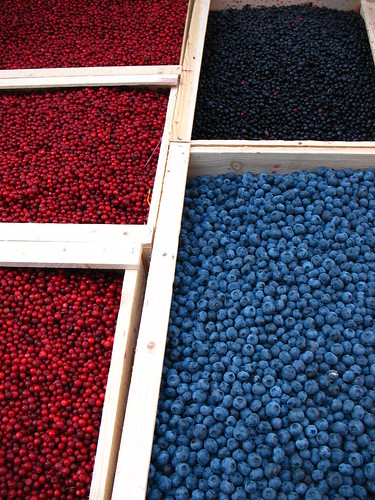
lingonberries, wild Swedish blueberries, and American highbush blueberries., originally uploaded by Vilseskogen.
Posted by
LS
at
7:25 AM
0
comments
Sunday, July 4, 2010
Pickling and jamming
So far this year I have made 18 pints of pickles, that is about 9 liters. And I also made half-sour pickles that are whole cucumbers fermented in salt-water for a week and then eaten directly, and they turned out to be really good! I don't think they will last long in the fridge. (Click on photos for larger images, all on my Flickr account.)
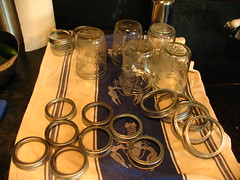
For the first time in my life have I canned the American way, which means that you have special glass jars and lids that are processed in either boiling water or steam to sterilize the content after the jars have been filled. The jars are called Mason or Ball jars, and are really easy to use. These jars were invented in the mid 1800's, and I think it is amazing I never saw them in Sweden. So smart design! After sterilization you can store the canned food at room temperature (but lower temp is better).
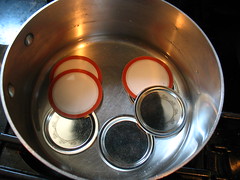
The lids have a rubber area on the inside of them (orange), so you heat the lids (simmering, no boiling), and then put them on the top of the jars with screwtop metal band to hold them not too tight in place. During the sterilization, extra air will come out through the lids and after the boiling, when the contents cool the jar will be sealed along the rubber edge and under negative pressure. You replace the lids each year, but can reuse the glass jars and the metal bands that hold the lids in place during sterilization. If you find a jar that doesn't have a properly sealed lid you shouldn't eat the content, they might have spoiled and be contaminated with bacteria. So you want to hear the 'pop' when you open a new jar.
Making the syrupy brine to pour over pickles - water, vinegar, sugar, salt, and some dill stems for flavor.
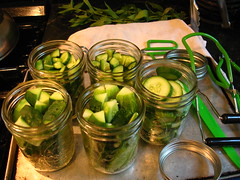
Cleaned jars are filled with homegrown cucumbers and waiting to be filled with hot brine.
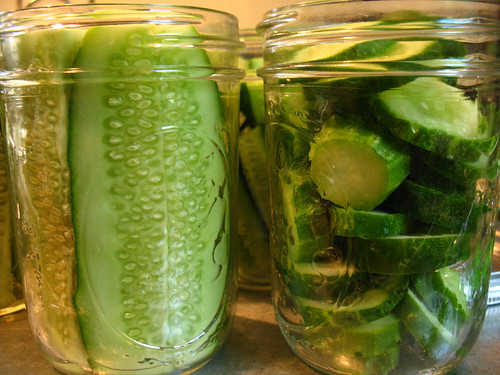
Pickles can be either long spears or slices. PP prefers spears, I love slices, so I made both.
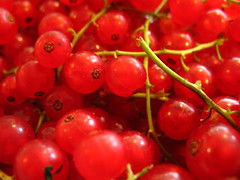
For the first time we got a real harvest of red currants this year, and they were delicious. I made red currant jelly (röda vinbärsgele) of most of it. My grandmothers used to serve red currant jelly with Sunday beef roasts.
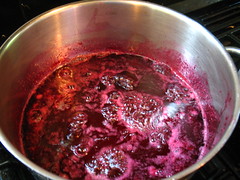
Red currant jelly is made from red currant juice. You boil the fruit and then strain it to get the juice without the skin and seeds. Then you boil the juice and add sugar so it gets a jelly like texture when it is cold - this step took much longer than I expected. This picture shows the jelly at a full roaring boil.
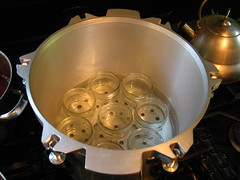
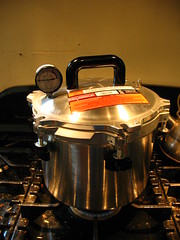
At the same time, the jars were sterilized in boiling water. I used our pressure canner for this and for the boiling-water sterilization of the filled jars, but without the heavy steel lid.

Filled small jars (1/4 pint, ca 1 dl) with red currant jelly, ready to be sealed with lids and metal bands.
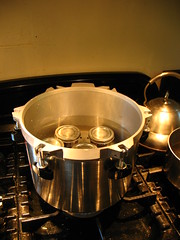
The closed red currant jelly jars are put into the water bath to be boiled for 10 min.
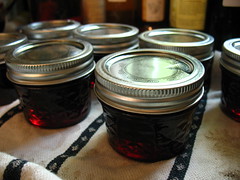
Red currant jelly - finished! Heaven in a jar.
Posted by
LS
at
9:30 AM
0
comments
Labels: canning, food, fruit, gardens, home cooking, homemade, New Jersey