Showing posts with label plants. Show all posts

Wednesday, November 12, 2014

Recycle, reuse, refine

I have surfed the net and stumbled upon some fantastic art made of waste.

Like these sculptures made of broken CD's made by the Australian artist Sean Avery, found on the website Demilked.com.


And lots of amazing insects made from old electronic components, by Julie Alice Chapell, presented on her Facebook-page and on Etsy.


Electric wire is also recycled into art, like these little trees by BarbaraCCreations on Etsy


More pictures here. 

Be well, everybody!

Thursday, October 16, 2014

A new logo! and some old ones

I am a member of at least 5 different Amateur Societies/Clubs which all reflects my hobbies.

Here are some of their logos, the first one is brand new, designed by me . The bug is a stinkbug, Graphosoma lineatum, which is called strimlus in Swedish. Our old logo looked like something copied on a blue-ink copiator in the basement, rather outdated.

The society Sörmlandsentomologerna. 

  The Swedish Garden Amateur Society, with linneas of course.


 The embroidery society, started in Täcklebo but now has members from all Sweden.


Södertälje ridklubb
My dear Horse Riding Club which is organizing competitions for the Swedish Horse Jumping Elit this weekend, the logo looks like this (below). I will be there all Friday and Sunday.


The Canoeing Club in Södertälje, I keep my canoes in their house.

And at last, not my club anymore, but in my heart since 1980 when I joined Fältbiologerna. We had two logos during my years in the club. I read on their web site they are discussing a name change. The first name of this old club was SFU. The club slogan is Youth Nature Environment.

This is the present logo, LS, did you vote for it back in the days??

The old logo, the scythe is added to the original image. The slogan was more down to earth then,
in the 1970´s. "Keep your boots muddy"


Friday, August 22, 2014

Six-legged abundance, and how to discover it

margined leatherwings (Chauliognathus marginatus_beetle_P6220530

Despite growing up in an entomological family, and I mean that literally, and later been surrounded by people that know and care about insects, insects, and insects, it is not until this spring and summer where I suddenly felt a real urge knowing the insects in my backyard.  I cared about the plants, the birds, the mammals, the clouds, the rocks... but the insects had just been there and been cool and fun, but I didn't bother so much with the science of them.

But, then I was part of a Bioblitz and everything counted.  I had to beat my sister in the species count on the long-term Bioblitz, so insects became important.  (She won.) A good digital camera made the observations permanent (thanks for the loan, PP).  But the most important help and driver was actually the internet.  The amazing and helpful people on Bugguide.net that help me identify everything (from a photo), be it a common stinkbug or a rare beetle.  My Dad, who sends encouraging, insightful notes full of anecdotes via e-mail.  My Mom and sister, keeping up with the butterflies on their end over on the other side of the ocean.  Suddenly, insects have become attainable.

Also, and I have to admit it, Facebook is a great resource for species expertise.  If you just stay away from the entertainment news and junk on Facebook, it can actually be a useful thing.  I have gotten so much help with strange insects from internet people, many of which I have never met, never talked to in person, and have no clue where they live or how they look like.  I reciprocate, of course, telling people on iNaturalist and plant ID groups on Facebook what their unknown plants are when I can.

This is true citizen science, the broadening of biodiversity knowledge to the backyards and driveways of our homes, to people that are just interested and not professionally involved in the science of bugs, plants, and so on.  And all this knowledge is freely shared, no money, no accounts, no subscriptions, and certainly no expectation of accounted returns.  We are just all in this biodiversity knowledge curiosity together...  like a kiddie pool!  Except the whole world's nature is our pool.

So, here are some recent finds from our garden, and some I figured out myself, and others I got a lot of help with. Click on the photos and you can see larger versions of the photos and what the species are on Flickr.  This is just a gallery of insect beauty and biological diversity in a regular backyard in New Jersey, USA.

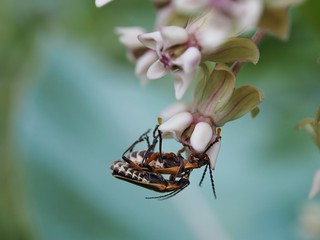
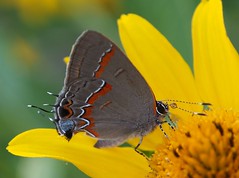
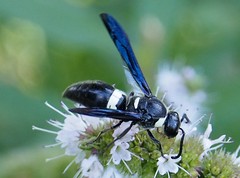
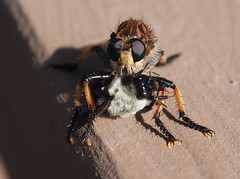
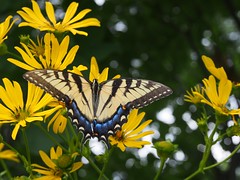
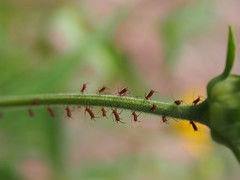
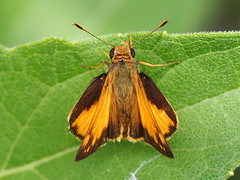
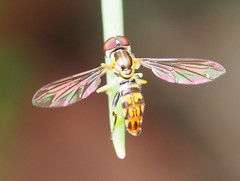
Redbanded hairstreak P8180860cropped Monobia quadridens - Four-toothed Mason WaspP8180863cropped Robberfly with caught bumblebee P8180810 Eastern Tiger Swallowtail P8170772 red aphids P8170638 Zabulon skipper male P8170596.cropped Toxomerus geminatus P8170614cropped Chinavia hilaris (green stink bug) Hemiptera IMG_6664 Clymene moth Haploa clymene IMG_2798 Harmonia axyridis (Multicolored Asian Lady Beetle)  IMG_6591

Thursday, July 10, 2014

I know it's a weed but...

Isn't it pretty? A bit unusual with the pink eye. Åkervinda is the swedish name and the scientific name is Convolvulus arvensis L.

Saturday, July 5, 2014

What is out there? Bioblitzing's amazingness...

A week ago I participated in a Bioblitz, a biodiversity inventory, at the old Doris Duke estate Duke Farms in Hillsborough, New Jersey (USA).  Her large working farm, park, and mansion has now been transformed into a sustainable natural area with large untouched forests, giant wildflower meadows, and bike trails and a science activity center.  It is a great place to visit.

A bioblitz is a concentrated biodiversity inventory by a group of people, experts and the public usually together, that takes place usually during one day or 24 hours. We were out for 6-7 hours during a hot and sunny June day, but spent the most time in the shady forest.

My group was going to look for plants that not yet had been found.  That might sound strange, but since there already was a long list of plants, we were going to look for the missing things, the gaps, and also go to some of the special areas that are inaccessible to the public to look for new species.  Of course, if we saw other cool non-plant things, then we should take note of those too.  So, what did we find?  Lets look!
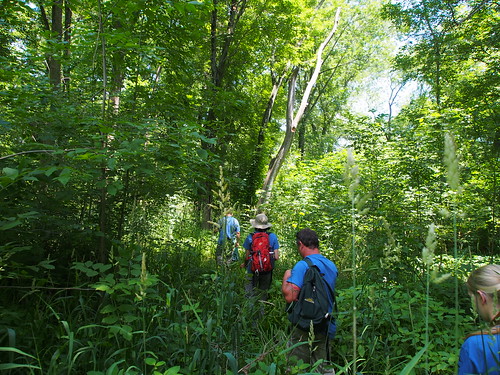
Bioblitzing in wetlands P6280555

We walked into a floodplain forest that often gets flooded during heavy rains.  The grasses and other plants reached our shoulders, and it was moist like the tropics.  Not many new plants, but a lot of animal life.

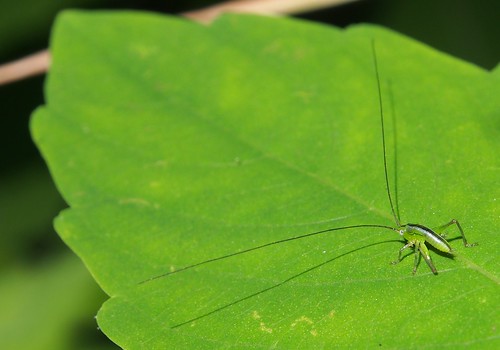
katydid nymphP6280571

A katydid nymph, very colorful and tiny.  I saw it first because its long antennae sparkled like thin metal wires in the sun. It is some kind of meadow katydid, but too early to tell what species it will become when it grows up.

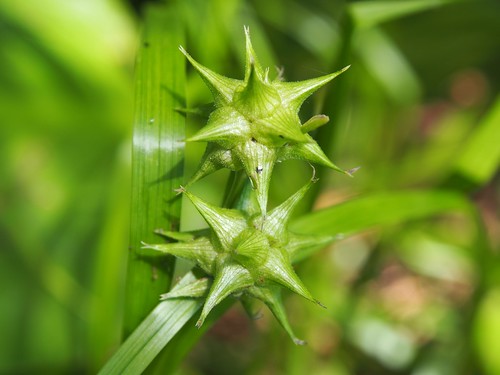
Carex cf grayi P6280545

This is a sedge, probably Carex grayi or a closely related species.  The inflated 'bottles' contain the fruit inside.  They look like green stars in the vegetation, and each sedge head is about 2 cm in diameter.

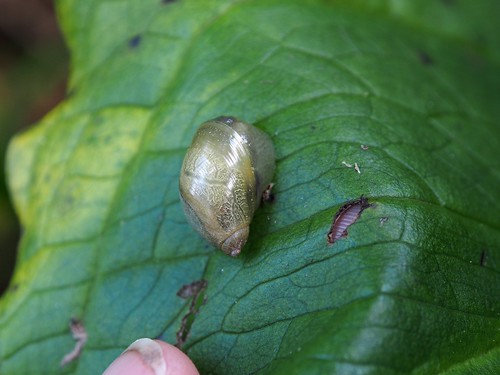
Amber snail maybe, P6280551

Lots and lots of snails were eating the skunk cabbage, and this one had a translucent shell.  I think it might be an amber snail, but I can't find any good book on land snails for northeastern USA.  Too bad, because that would be fun to learn more about.

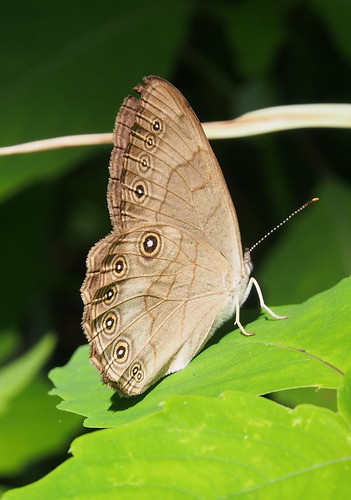
Appalachian Brown Satyrodes appalachia

This butterfly has an appropriate name - Appalachian brown (Satyrodes appalachia).  It was sitting on the same plant as the katydid nymph.  I have just started to look at butterflies and they are so different from the Swedish ones.  The names are weird too - like 'brown', 'comma', and 'question mark'.  Very descriptive, but unexpected. Or maybe not :).

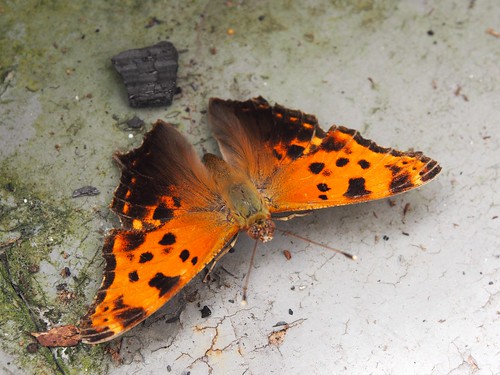
Eastern comma Polygonia comma P6280594

And here, this is an Eastern comma (Polygonia comma), a butterfly.  On its underside of its wings (which you can't see here) it has a white mark that looks like a comma, thereby its name.


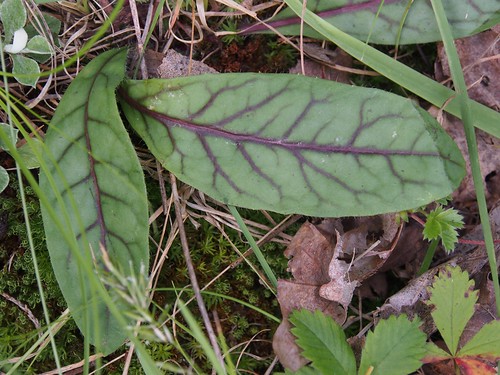
Rattlesnake weed, Hieracium venosum_P6280543

Didn't we see any plants?  Yes we did, but they were less fun to photograph!  Here is one that you can identify by its leaves only, which is always nice... no need to look for hairs on fruits or count petals!  This is rattlesnake weed (Hieracium venosum - those veins sure look like filled with blood!).  It is in the sunflower family and related to dandelions and such. And it is a wildflower, not a weed.

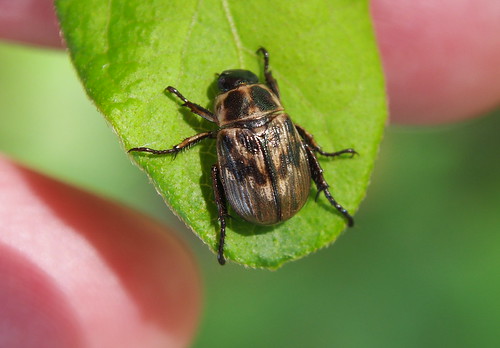
Exomala orientalis (Oriental Beetle) P6280540

Some species are not native to this area but are very common exotic newcomers.  This is oriental beetle (Anomala orientalis or Exomala orientalis) has its ancestor in Asia, but now is common in this area.  I have seen it on our porch several times, attracted to the porch light in the evenings.  It loves garden plants!

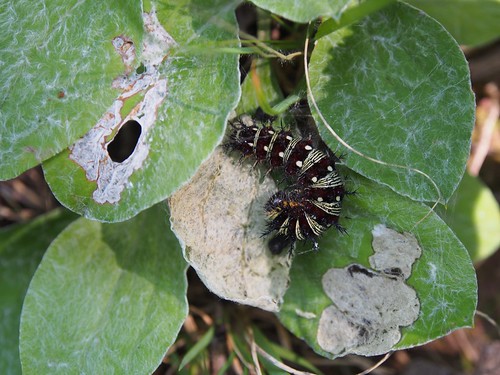
Vanessa virginiensis - American Lady P6280528

This ferocious-looking butterfly caterpillar will grow up and become an American painted lady (Vanessa virginiensis). It is eating a pussy toe plant (Antennaria) we found in a small area on sandy soil near huckleberry bushes.  I found one ripe huckleberry to taste, and they are very similar to American blueberries in looks and taste.


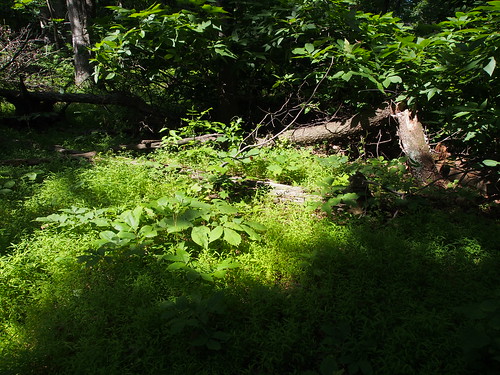
hardwood forest with storm damage

Here is the forest, which after the hurricanes we have had are more open with light gaps from fallen trees, and the invasive Japanese stiltgrass is thriving.  Forests around here have a lot of oaks, maples, and hickories.  Sometimes also tuliptrees.

Lonh-horn beetle, Graphisurus fasciatus P6280515

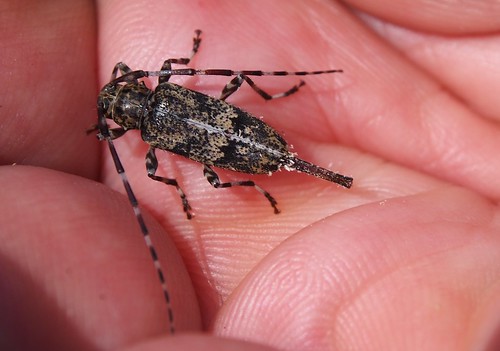
Long-horn beetles are always fun!  This is a female Graphisurus fasciatus, with a egg-laying tube at the back.  In the hand it sat very still, but as soon as we put it back on the tree trunk it scurried off very quickly.

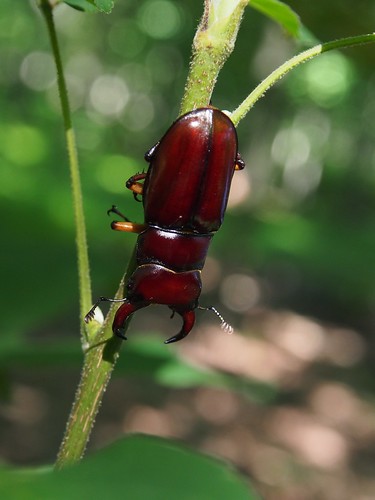
Lucanus capreolus P6280470

This was probably the coolest animal we saw!  A 4 cm long stag beetle (Lucanus capreolus).  They are said to be very common, but I have never seen one before. 

Hickory gall midge Caryomyia P6280519_closeup

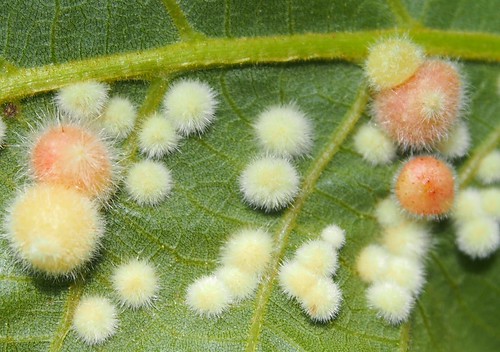
Weird fuzzy golf balls?  No, tiny galls on the underside of a shagbark hickory leaf.  Inside each gall is a tiny developing larvae of a fly or wasp, in this case a small fly.

Winged Euonymus P6280504

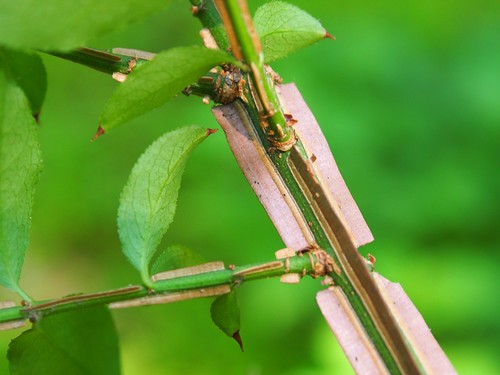
Some invasive plants are really cool, but people don't like them even if they have fascinating characters.  This is burning bush, also called winged euonymus (Euonymus alatus). Look at those cork lists along the stem!  How can you not love that!?

Aralia spinosa P6280500

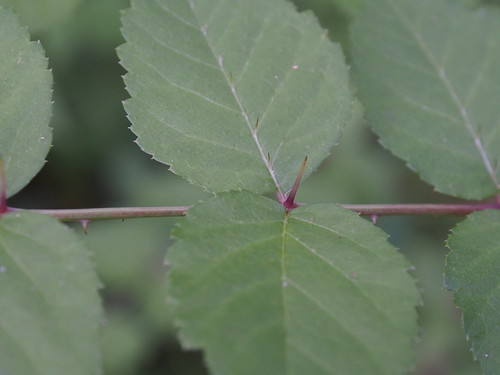
Spiny aralia (Aralia spinosa) has a suitable name.  These spines are on the leaves.  I wonder who it is trying to scare off? 

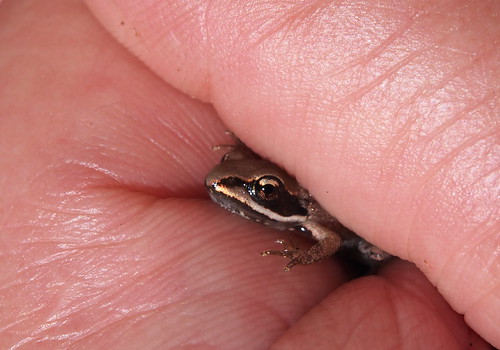
baby wood frog P6280492

One of several wood frog babies we saw.  Don't worry, it is not getting crushed.

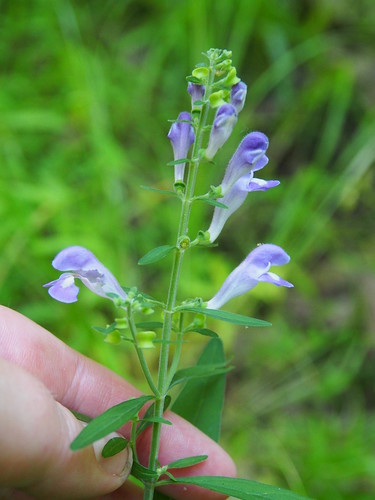
skullcap, Scutellaria integrifolia P6280482

A new species for me, a skullcap (Scutellaria integrifolia).  Look at the flowers, the top part looks like a cap you can put on your head.

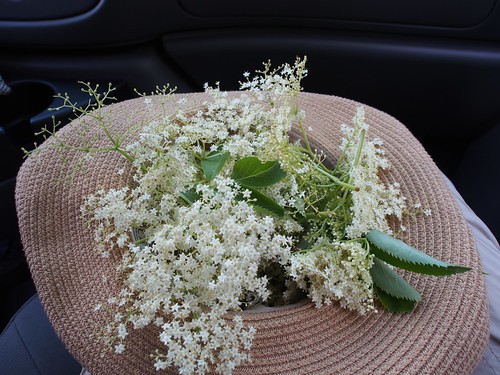
Elderflower collecting P6280582
Towards the end of the bioblitz we saw a big flowering elderflower bush (Sambucus nigra/americana), and I was allowed to pick some of the fragrant flowers in the only thing I had with me, my hat.  The flowers ended up in a jar with lemon peels and vodka and now we have Swedish-style elderflower akvavit in our freezer! Yummy!

Sunday, March 9, 2014

Spring is in the air!
This week has ended with lots of sun and warm air. All plants are stretching and pushing themselves up and into the air. Next week I will welcome my sister again. Längtar!!!


Saturday, March 1, 2014

Happy Birthday, KV!

We have known each other and been friends 3/4 of our lives now.  :)

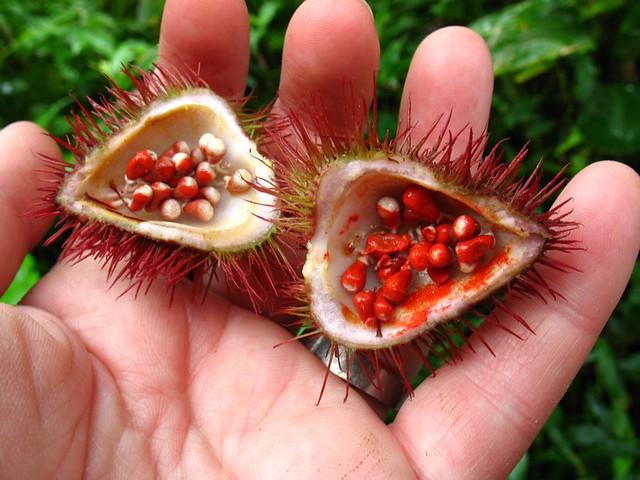
Here is a special flowering plant for you!

Bixa fruits, the lipstick plant


It is the fruit of the lipstick plant, Bixa orellana, also known as annatto. And yes, it is added to lipsticks for color.

Friday, November 15, 2013

Stamp of the day: birch wood

Yesterday I was teaching about plant anatomy, about the cells and structures inside plants that make plants work and make them alive.  Wood is an amazing thing, made up from lignified plant cells that become hard, sturdy, and dead and can hold up giant trees through snowstorms and summer rains. Wood is dead xylem, the part of the vascular tissue that transports mostly water up into the top of the plants.  The yearly rings in wood from temperate regions are because the xylem made in spring are made from large diameter cells, lots of water is needed then.  In the summer and fall, then the xylem cells are smaller, and the tissue becomes tighter and darker, and you get the dark band for that year. 

Here are some fantastic photos of plant anatomy, and this Swedish stamp show wood from birch, which you can of course use for firewood. 

Wednesday, November 13, 2013

November thoughts

November.

Solen kikar försiktigt upp ovanför horisontkanten, en skogsridå av guld bländar mig. Soluppgången är långsam och vacker, precis som om solen tvekar att kliva upp. Precis som jag, som gärna ligger kvar under mitt varma täcke om morgonen. Nu kommer nordbornas svåraste tid, det är mörkt och kallt i mitt Norden. Inte kallt med gnistrande snö och rimfrost på träden, utan ett tråkigt kallt, rått och fuktigt väder, strax över nollstrecket på termometern. En lång väntan, på snön, på glänsande isar, på ljusets återkomst, på växter som återigen knoppas. Bland blåsippsbladen vilar knopparna redan och mina narcisser har långa vita rötter i krukorna. Det känns trösterikt när alla klorofyllblad ligger bruna och vissna på marken, att veta att de nya redan är färdiga för start.
     Himlen är svagt upplyst och molnen är belysta underifrån, en ljust blå himmel och mörkt grafitgrå moln, fyllda av fukt. På natten lyser stjärnorna och jag gör min resa i Karlavagnen på väg mot nästa vår.

EH

Translation by LS:

November

The sun carefully looks over the edge of the horixon, a forest drapery of gold is blinding me.  The sunrise is slow and beautiful, just as if the sun is hesitating to get up.  Like me, who would love to stay under my warm cover in the morning.  Here comes the hardest time for the scandinavians, it is dark and cold in the Nordic area. Not cold with sparkling sno and hoary frost on the trees, but a boring, cold, raw and wet weather, right above the freezing point on the thermometer.  A long wait, for the snow, for the shiny lake ice, for the return of the light, for plants that are in bud.  Below the hepatica leaves are already ready buds and my daffodils have long, white roots in their pots.  It feels promising when all the chlorophyllic leaves are brown and weathered on the ground to know that the new leaves are ready to start. 
    The sky is barely lit and the clouds are colored from beneath, a light blue sky and dark graphite grey clouds, filled with moisture.  During the night the stars shine and I travel with the Big Dipper towards the next spring.

Friday, October 11, 2013

Fall colors

I love the red hues that our sumac plants create along highways, fences and forest edges this time of the year. Here is a photo from today's rainy morning.

Monday, September 16, 2013

Green, brown, yellow and purple...

For the first time in my adult life I have tried to dye something, and it came out great!

 I have memories of dyeing a cotton scarf at a camp when I was maybe 12. The plant we used as dye was birch branches and aspen leaves. The people that used aspen got these really nice yellow scarves. We that were stuck with the birch got dirty light-green to beige scarves that looked old and worn... It was a major disappointment, especially since I had asked for permission to use the aspen, and the camp leaders said - no, we will split all groups in two parts, and you can't be in the other group. Why not? No idea. Probably some kind of semi-I-will-show-the-kids-I-have-the-power scheme.

Anyway, since then I have not dyed anything with natural colors that I can remember, and I am not counting stains from tomato sauce, blueberry jam, wine, or coffee on my shirts. In early summer I bought some undyed white silk scarves, white cotton yarn, and cleaned wool rowing (basically unspun naturally white wool). We got some books, and read and learned. The materials have to be pretreated with alum, a chemical, so the dye takes better, so I did that.

 Now, what to use as dye? I knew I wanted to make different colors, and base it on all natural, things I had at home.
RED ONION: Natural dyes on silk, cotton and wool
The first batch was red onion skins. Who knew that red onion can give green colors!? Surprise! The colors showed in the book didn't really match what I got, and that is probably due to the chemistry of our well water. I also dyed some filter paper in this batch.
 COFFEE - Natural dyes on silk, cotton and wool
Second batch, coffee... Old coffee grains, cooked up again, filtered off, and then used as a dye bath. I think my coffee was pretty weak, so it became a light brown. TURMERIC: Natural dyes on silk, cotton and wool
Third batch, yipeee, Turmeric! From the spice cabinet. What a color! Bright orange!!! Like, like, I don't know what. A living, deep orange. BLUEBERRY - Natural dyes on silk, cotton and wool
Final fourth batch was a little test. Sometimes we have fresh blueberries from the store that go bad (=mold) in the fridge, so I had saved up a bag of them in our freezer. I cooked the berries down, filtered them, and then used the blueberry juice as a dye bath for 4 days. I had put the textiles and the dye liquid into an old orange juice bottle. Unfortunately I screwed on the top tight and left it out in the sun - after 4 days the bottle was ready to explode. Fermentation! :) Nothing got destroyed, and the colors of light purples are gorgeous.

The dyed wool and cotton yarn is now in Baltimore in AREA's artsy hands, to be used in some creative work. I can't wait to see what she will do with it.

What I learned?

  • Always treat your fibers with mordant, then the colors will be better. 
  • Don't hang the finished textiles for too long in the sun or they will become sunbleached. 
  • Do not make fermented blueberry juice. 
  • Big-mouthed orange juice plastic bottles are great for long-term dyeing.  No risk that an animal will drink it and you can shake it a lot to distribute the liquid well.