But it doesn't work like a camera - it works like a real microscope since you can't change the aperture and therefore not the depth of focus. The result is that the depth of focus is minimal. I think this is something you can get used to, in many ways, it just gives you attention only to one detail and not the whole field. Of course, if you have a flat object, then you can get better focus...
I also tried to fiddle with some extra light from a little LED flashlight, which sometimes work. The sensors sometimes get the colors all wrong, blue will be purple and that white background will be white. Things like that should be possible to fix in the software that comes with the camera, but it is not. You need to fix it in Photoshop or similar instead... But, it is a great little thing. I am planning to take many more photos of tiny things with it.
Here are some examples:

The leaf underneaths of the weed purple dead nettle (Lamium purpureum) look like an old, wrinkled man's face. Long gray hairs and sunken parts between the veins.
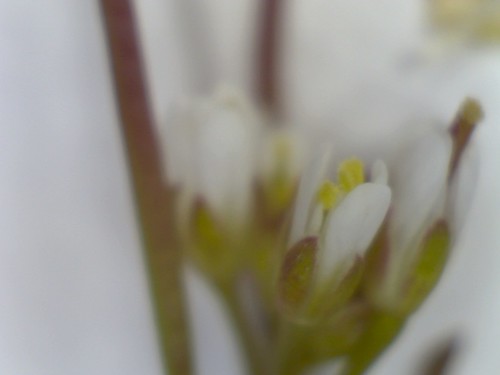
Sometimes the lack of focus can be used to great effect. This is hairy cress, a spring-flowering weedy mustard plant.
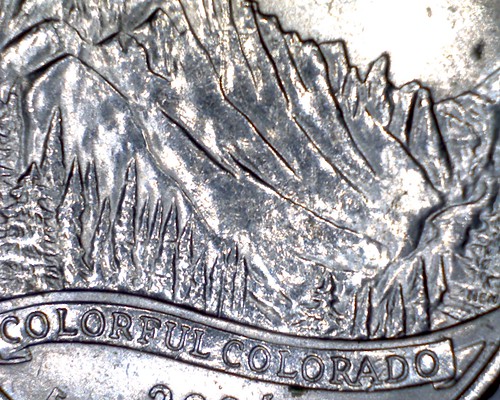
A small coin - flat, so better focus. This is a US quarter (25 cents), showing the Rocky Mountains of Colorado.
No comments:
Post a Comment
Note: Only a member of this blog may post a comment.